What Would Synlait Be Worth to Fonterra or a2 Milk?
Speculation of a possible joint move by Fonterra and a2 Milk to buy Synlait raises a much bigger strategic question, says agribusiness expert Dr Nic Lees.
 increase font size
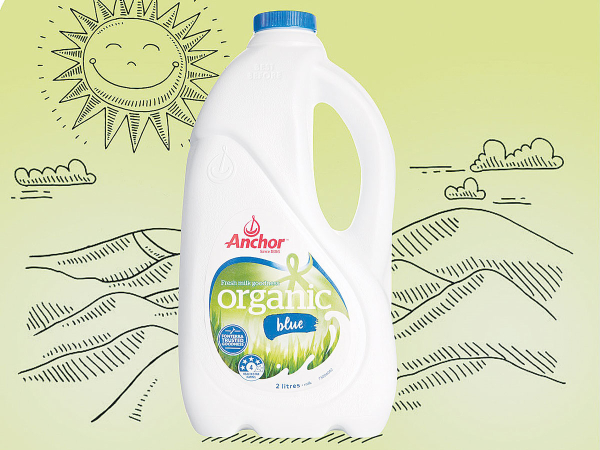 Fonterra organic milk suppliers received a record milk price of $10.80/kgMS last season.
Fonterra's organic farmers received a record milk price of $10.80/ kgMS last season.
It processed 85 million litres of certified organic milk in 2022-23. For the current season, Fonterra is forecasting 105 million litres.
The co-operative’s organic milk price has fluctuated over the years. In 2016-17 it paid suppliers $8.83/kgMS before dropping to $7.50/kgMS the following year. In 2019-2020, it broke the $10 barrier for the first time. In 2020-21, the organic milk price dropped to $8.85/kgMS before topping $10.02/ kgMS two years ago.
A Fonterra spokesman told Rural News that demand for organic dairy continues to increase with consumers continuing to prioritise health and wellness, sustainability and animal welfare in their purchasing decisions.
However, despite the preference for organic, affordability remains a barrier. Inflation and other economic factors are impacting spending on premium and discretionary products such as organic.
“Organic milk supply seems to be coming back into balance after surpluses across the USA and EU in recent years, which is resulting in increasing demand for NZ dairy.”
Fonterra supplier Adrian Townsend, who runs Durham Farms in Waipu, told Rural News that a higher milk price is always welcome and reflects the hard work and cost that goes into producing an organic product.
Townsend points out that this was the first time that the organic milk price was decoupled from the conventional milk price – the price of conventional milk price decreased while the organic milk price increased.
“This would be due to the increase in demand globally for organic milk, and a continued shortage of organic dairy producers,” he says.
On organic milk price fluctuation over the years, Townsend says that a lack of price certainty and consistency is always a challenge for any business. “As operational costs are always there and with higher inflation, staff shortages, higher interest rates and extreme weather events become a real challenge, especially for small operators,” he explains.
“Our approach is to minimise reliance on outsider suppliers with their associated costs and keep everything in-house, for example growing all our feed on farm.”
Durham Farm milks 240 cows. Townsend says moving to an organic operation was the right choice at the time.
“For us, it was the best way to produce milk whilst looking after the land.
“We are now going the extra step and making our farming regenerative. Over the long term, a regenerative approach to farming should also provide better resilience to climate change.”
Durham Farm also produces branded milk for sale in Auckland. Townsend says this shows the demand is there and growing.
“As such, we are looking to expand our dairy range to meet this demand.”
Fonterra produces a range of organic dairy ingredients – wholemilk powder, skim milk powder, butter, pure milk fat, proteins and cheese – as well as a range of consumer milks, butters and cheeses.
Its largest organic market is the US. However, the co-op also sells across NZ, Australia, Canada, Mexico, China, South Korea, Taiwan and South East Asia.
Speculation of a possible joint move by Fonterra and a2 Milk to buy Synlait raises a much bigger strategic question, says agribusiness expert Dr Nic Lees.

In the past, much has been made of the concept of farm to fork, but an Australian expert in food science and marketing with experience in the dairy industry, Dr Angeline Achariya, says the reverse of this slogan is critical to win modern day consumers.
A four year trial has reaffirmed that mixing plantain into dairy pastures can help reduce nitrogen losses to freshwater while maintaining milk production and profitability, say researchers.
Fonterra has opened its upgraded Chengdu Application Centre, bringing New Zealand dairy expertise closer to customers in one of China's fastest-growing regions.
Tatua chair Stephen Allen says he leaves the co-op with a deep sense of gratitude for the people who have contributed to its success.

More signs of a booming kiwifruit sector.
OPINION: David Seymour and James Meager's plan to make it easier for farmers and orchardists to operate drones can best be described a 'courageous' move.
New Zealand wool is reaching new heights as air filtration companies move away from synthetic products to biodegradable alternatives.
Opuha Dam's ability to protect South Canterbury communities from major flooding has taken a significant step forward, with Opuha Water Limited (OWL) successfully commissioning a new outlet valve capable of releasing record volumes of water from the dam ahead of a weather event.
There's been widespread support from the primary sector for the Government's announcement on changes to freshwater farm plans that come under the Natural Environment Bill, which is now set to replace the existing RMA.
A partnership between state-owned enterprise Pāmu (Landcorp Farming Limited) and charity Meet the Need is putting more than quality New Zealand beef into food bank parcels this year.