Esther Guy-Meakin Appointed Chief Executive of the NZ Meat Board
Esther Guy-Meakin has been announced as the new chief executive of the New Zealand Meat Board (NZMB).
 increase font size
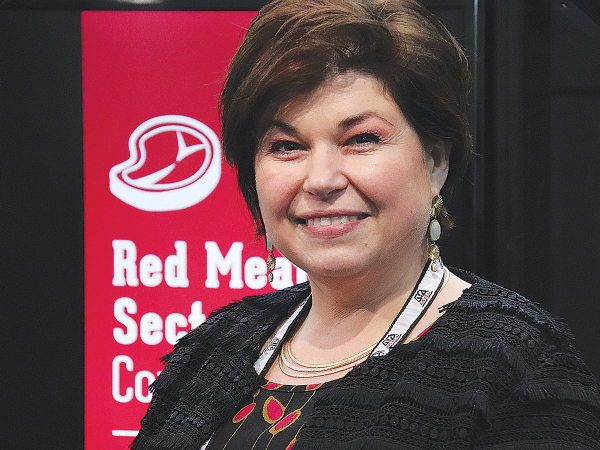 Meat Industry Association chief executive Sirma Karapeeva.
Applications have now opened for the 2026 Meat Industry Association scholarships.
Students considering a future in the red meat sector have until 26 November, 2025 to submit applications for the scholarships which are valued at $5,000 for undergraduates and $10,000 for post graduate students.
Meat Industry Association (MIA) chief executive Sirma Karapeeva says the scholarship programme covers a wide range of topics.
“Scholars selected for the 2025 scholarships are pursuing subjects including commerce, nutrition and food science, environmental science, law, agribusiness, food marketing and mechanical engineering, with a post graduate scholar undertaking research into foodborne pathogens," Karapeeva says.
She says the red meat sector has a wide range of career pathways, meaning many subjects fit the criteria.
Karapeeva says the MIA is looking for highly motivated people focused on subjects that will support future careers in the industry.
“To grow the sector, which is so important to the New Zealand economy, we need to be recruiting a pipeline of highly-skilled people and future leaders and the scholarship programme provides an important pathway for talented young people into the industry.”
Applicants must be a New Zealand citizen or permanent resident studying at a tertiary institution in a discipline relevant to the meat processing industry and planning a career in the red meat sector, beyond the farm gate.
To complete the application form, visit www.mia.co.nz/mia-scholarships-current/
Esther Guy-Meakin has been announced as the new chief executive of the New Zealand Meat Board (NZMB).

As expected, the US has launched a safeguard investigation into lamb imports, a move that could impact New Zealand sheepmeat returns.
New Zealand's red meat sector says it welcomes the Government's focus on trade ahead of the general election in November.
New Zealand red meat exports are booming but a pending decision in the White House, Washington D.C., could dent sheepmeat earnings.
Prime Minister Christopher Luxon says the red meat sector is doing an excellent job promoting our pasture-fed system around the globe.


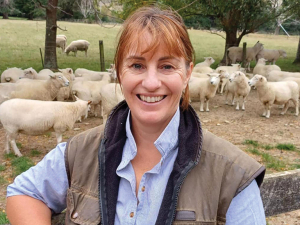
B+LNZ's Wormwise veterinarian Mary Bowron has won the Best Sheep and Beef Vet of the Year Award in recognition of her outstanding contribution to New Zealand’s sheep and beef sector.
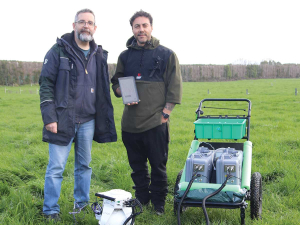
Researchers at Massey University are using a special piece of scientific equipment to improve the measurement of greenhouse gas emissions from pasture soils.
More signs of a booming kiwifruit sector.
OPINION: David Seymour and James Meager's plan to make it easier for farmers and orchardists to operate drones can best be described a 'courageous' move.
New Zealand wool is reaching new heights as air filtration companies move away from synthetic products to biodegradable alternatives.
Opuha Dam's ability to protect South Canterbury communities from major flooding has taken a significant step forward, with Opuha Water Limited (OWL) successfully commissioning a new outlet valve capable of releasing record volumes of water from the dam ahead of a weather event.