NZ Apple Sector Pushes for Japan & Korea Market Access
The apple sector is working with the Government to unlock access to two key markets that could bring millions in revenue for apple growers.
 increase font size
 NZ Apples and Pears market access manager Danielle Adsett says the expected lower apple crop is being carefully managed.
Sixty five percent of NZ's apple crop is grown in Hawke's Bay and 4,000 hectares - or about half the total crop grown in the region - has been affected by Cyclone Gabrielle.
NZ Apples and Pears market access manager Danielle Adsett told Hort News, while her organisation is not involved in the marketing of apples, it's been assured by exporters that the expected lower crop is being carefully managed.
NZ apples are sold to almost 70 countries around the world - with China being our largest market. However, only 13% of NZ's total crops is sold there. Vietnam has, in a matter of years, risen from 13th to become our 3rd largest market.
Adsett says Asia is obviously a focus for NZ as the middle class in those countries grows. Taiwan and Japan are also up-and-coming markets.
"The fact is that NZ produces the best apples in the world because of our growing systems and climate," she told Hort News. "As such, we are able to offer a premium product."
Adsett says, in sustainability terms, NZ has already done an awful lot but hasn't really told the story about our low carbon footprint and our quality orchard management practices. She says, on a per hectare basis, the NZ apple sector is highly productive compared with others.
She adds the other big change is the image of the sector and how it's portrayed.
"Many people perceive it to be a manual labour industry with a focus on picking and pruning trees. But this is so far from the truth," says Adsett.
"The job has definitely changed and we have seen that in the orchards and the packhouses. We have stories about some of our members bringing in people from the job seeker benefit into their packhouse who are now running their multi-million dollar technology."
She says the industry has absolutely changed and is all about technology and exciting innovation, with great jobs on offer.
Adsett concedes that while many people are trying to be optimistic about the future, the reality for many is heartbreaking.
"Trees remain covered in silt; the ground is wet and people are doing their best to support each other in very difficult times."
The apple sector is working with the Government to unlock access to two key markets that could bring millions in revenue for apple growers.

More than 300 growers, exporters, researchers, service providers and industry leaders will descend on Queenstown later this month for EXPO 2026, the annual conference for New Zealand’s apple and pear sector.
Eighteen months ago, when negotiations for a free trade deal with India were announced, New Zealand apple growers expressed their desire to be part of the deal.
The chief executive of Apples and Pears New Zealand, Danielle Adsett, says fruit quality this year is phenomenal and the sector is hitting crop estimates, which is great for growers.
Danielle Adsett has been announced as the new chief executive of New Zealand Apples and Pears (NZAPI).



LIC shareholders have elected a new North Island representative to the co-operative's Board, along with five representatives to its Shareholder Reference Group (SRG), following the company's Annual Meeting held in Invercargill.
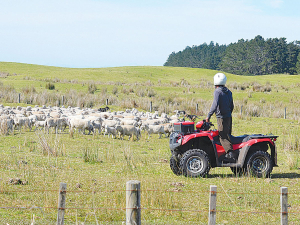
Farmers across parts of Southland and South Otago are continuing to deal with difficult conditions after a prolonged run of wet weather, with pressure building around feed supply, stock management, pasture damage, farm infrastructure and everyday workloads.
Federated Farmers says it welcomes Labour's commitment to reviewing the Sharemilking Agreements Act, calling on other major parties to do the same.
For Canterbury dairy farmers Sian Meijer and Rick Wobben, wearable technology has become one of their most valuable on-farm tools - helping manage 1850 cows across an expansive, high-performing dairy operation while improving efficiency, mating outcomes and day-to-day decision making.
Fonterra has unveiled its annual results for the 2026 financial year, posting $27 billion in revenue and close to $20 billion returned to New Zealand farmer owners and unit holders.
The first major update to the Dairy Cattle Code of Welfare in more than a decade has been released, marking what DairyNZ describes as an important step in ensuring animal welfare standards continue to evolve alongside scientific evidence and on-farm realities.