Resilient Global Dairy Industry Overcoming Volatility
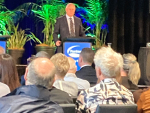
Fonterra chief executive, Richard Allen says being resilient has helped the dairy industry overcome extreme volatility in recent years.
 increase font size
 Westland chairman Peter Morrison.
OPINION: With most of New Zealand gripped by recent events in Christchurch, a huge week in our dairy industry passed with little media coverage.
Fonterra farmers celebrated, albeit without popping champagne corks, their co-op returning to profitability as announced in its half-year results. However, Fonterra bosses and shareholders are under no illusion that the co-op is out of the woods.
Over at South Canterbury processor Synlait (and in China), champagne would have been the order of the day: the listed company had just announced another outstanding half-year result.
But it was the small dairy co-op on the West Coast that last week stunned everyone.
In the preceding weekend, Westland chairman Peter Morrison and directors Katie Milne, Andrew MacPherson and Brent Taylor had flown to China. And last Monday night, Morrison signed a deal signalling the likely beginning of the end of NZ’s second-largest dairy co-op.
A photo doing the rounds on social media shows Morrison ready to sign while his grinning directors stand in the background, arms folded. Surprisingly, no signing ceremony photograph was released by Westland.
No one was surprised that Westland is being sold; its 350-odd shareholders are tired and frustrated with the low milk payouts and had been on the market, via the board, looking for buyers.
The sale process started with 25 possible suitors, dwindling to a shortlist before Yili, China’s largest dairy processor, was declared the victor.
Westland hasn’t been sold yet; that decision will be made by shareholders at a special general meeting on July 4.
It will also require High Court approval under section 236 of the New Zealand Companies Act, consent under the Overseas Investment Act and completion of other customary conditions.
Westland’s board met last week with farmer shareholders to explain and ‘sell’ the Yili deal. Some farmers were keen to know if there is a Plan B.
Yili has agreed to match Fonterra’s milk price for the next 10 years. But what happens after that? Will Westland suppliers too far from Fonterra for it to collect their milk be at the mercy of Yili and its dictated milk price?
Over the next three months Westland shareholders will have to mull this and other questions before they consign their co-op to history.
Fonterra chief executive, Richard Allen says being resilient has helped the dairy industry overcome extreme volatility in recent years.

Northland farmer Greg Collins has taken over as chair of the Fonterra Co-operative Council.
Fonterra’s 2026 financial year was a year of delivery, with record volumes of milk collected, processed and shipped by the co-op.
Dairy farmers, still holding onto their Fonterra shares despite switching milk supply elsewhere or exiting the industry, now face a stricter share sell-down requirement.
Milk powder prices are continuing their merry run, firming up a potential $10/kgMS farmgate price this season.

Halter has launched Mav, an AI farming assistant that lets dairy farmers ask questions about their herd and pasture and get answers drawn from the data the company’s collars already collect.

OPINION: At first glance it appears that Father Christmas has delivered the rural sector good tidings, with most pundits predicting the return of the centre-right coalition.
For 15 years, Glenda Rees has travelled from Gore to Awarua, often several times a week, to keep watch over one of the country’s rarest birds.
With some farmers opposing a government-industry partnership set up to develop methane reducing products, one NZ company claims that it already has a product on the market.
During the nesting season, from September to December, industrious starlings can quickly build nests in the darker areas behind tractor and vehicle, usually close to hot engines, typically resulting in localised damage or in some cases complete write-offs.
The meat processing industry is much more collegial than it was in the past and is now more focused on common goals.