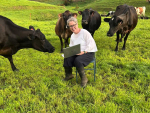
International Day of Rural Women: Two DairyNZ Farmers’ Stories
Today, 15 October, is the International Day of Rural Women, which recognises rural women’s contribution to farming, communities and the environment.
 increase font size
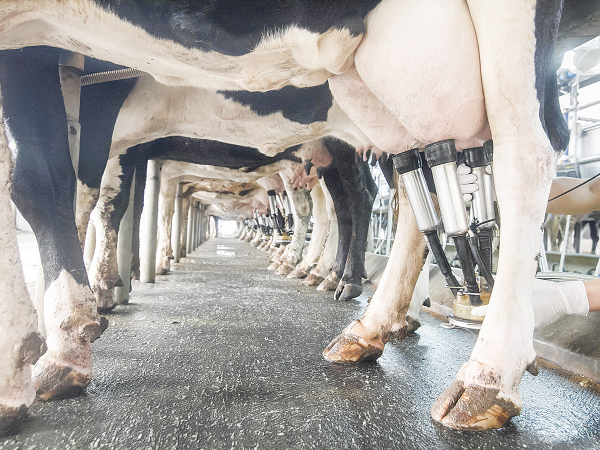 According to DairyNZ's latest forecast data, the outlook for the current season has been imrpoved.
OPINION: DairyNZ's latest forecast data on the Econ Tracker, that the outlook for the current season has improved, will be welcome news for farmers.
Only six months ago, the outlook was dire for many farms, with soaring input costs and a very average milk payout.
In recent months, dairy prices on Global Dairy Trade have risen, although the last two GDT events have seen prices retreat slightly.
DairyNZ says revenue projections have improved largely due to better results at the global dairy auction, along with Fonterra’s adjusted projected payout for the season, now sitting at a mid-point of $7.80/kgMS.
The Econ Tracker notes significant price decreases for feed and fertiliser, bringing these more in line with historical averages, reducing on-farm costs.
But interest rates remain high, becoming one of the most significant costs for farmers this season. The Reserve Bank signalled slowed reductions to the official cash rate, meaning interest rates are now likely to reduce more slowly and later than previously expected, which will concern farmers, many of whom are on floating rates.
When considering these changes, DairyNZ’s latest forecast data on the Econ Tracker shows the national breakeven forecast currently sits at $7.75/kgMS. This is below DairyNZ’s forecast average payout received of $8.12/kgMS, which is based on the estimated milk receipts for the 2023-24 season and dairy company dividends for all processors.
With less than two months left for the season, farmers will be turning their eyes to the next season and the forecast from Econ Tracker isn’t very good.
The breakeven milk price for the 2024/25 season is forecast to sit at around $7.76/ kgMS, while the forecast payout received is $7.79/kgMS.
The message for farmers is to continue managing their budgets and costs.
Farmers will be hoping for a payout higher than Econ Tracker’s forecast of $7.79/kgMS.
Today, 15 October, is the International Day of Rural Women, which recognises rural women’s contribution to farming, communities and the environment.
OPINION: New health and safety guidance unveiled by the Government recently provides farmers greater certainty about what is expected of them when managing risks on farm.
The first major update to the Dairy Cattle Code of Welfare in more than a decade has been released, marking what DairyNZ describes as an important step in ensuring animal welfare standards continue to evolve alongside scientific evidence and on-farm realities.
OPINION: Have a plan in place now!
Have a plan in place for your cows and staff.



National’s pledge to introduce 19 new national standards shows the party is serious about getting Wellington out of farming, Federated Farmers says.
The National Party’s policies to make it easier to grow fresh vegetables, secure reliable water and energy and simplify farm planning are practical changes that will give growers the confidence to invest, according to Horticulture New Zealand (HortNZ).
Fonterra Co-operative Group chief financial officer Andrew Murray has resigned to take up a role outside the dairy giant.
A major move is about to get underway to improve the quality and viability of dairy beef and cattle in NZ.
Veterinarians say changes to the code of welfare for dairy cattle provides a positive foundation for improved cattle welfare across the country.
Today, 15 October, is the International Day of Rural Women, which recognises rural women’s contribution to farming, communities and the environment.