Taking On Winnie
OPINION: No one messes around with Winston Peters, more so in a general election year.
 increase font size
 ACT leader David Seymour.
OPINION: At a time when farmers are advocating for less government spending and no new taxes, the dairy sector is rightly concerned by ACT's new immigration policy.
The policy, unveiled by ACT leader David Seymour this month, has one disturbing feature - a $6/day infrastructure surcharge on temporary work visas on top of existing charges.
According to ACT, this ensures migrants contribute to NZ's infrastructure "from day one before they start paying taxes".
ACT hopes this will raise an additional $80 million.
While this money will be welcomed in urban centres like Auckland and Queenstown, where hospitals, roading and schools are facing the pinch of a growing population, it's hard to understand how this will help the rural sector.
Of course, immigrants do pay for infrastructure just like everyone else. If they fill up their care, they pay fuel excise. If they live in a house, they pay rates or water charges. Rural migrants are not adding to pressure on housing because the houses are available on farms or in rural towns.
Rural schools are closing as student numbers dwindle and additions to rolls would help.
NZ dairy farmers face stiff competition from Australia and Canada, where the dairy sector is also facing labour woes.
Dairy farmers want prime candidates to come here, but a $6 daily charge and an annual allocation/re-application process is a significant deterrent as workers weigh up whether to come here or somewhere else.
Dairy farm employers want certainty and permanent staff, with a firm residency pathway for workers with the skill and attitude to add value to the sector and New Zealand.
ACT's policy doesn't seem to be well thought out.
For a migrant on a three-year work visa, this will mean an extra $6,500 up front. And it's likely that farmers, as employers, will need to cough up the extra money to hire or retain the migrant worker.
OPINION: No one messes around with Winston Peters, more so in a general election year.
With the general election just molnths away, farmers have launched a five-point plan for the next government.
Centre right parties are backing policy positions pushed by three farmer lobby groups ahead of the general election.
The New Zealand Nature Fund (NZNF) has congratulated the government on recently announced changes to the Active Investor Plus (AIP) Visa Growth category.

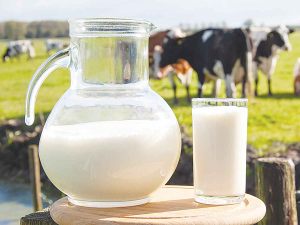
New Zealand dairy farmers are set to be the first in the world to receive access to a new digital physical milk pricing tool that enables them to fix the price for their physical milk.
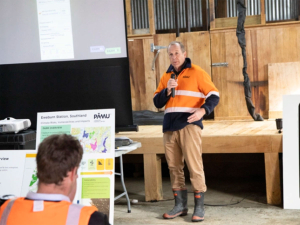
State farmer Pāmu is opening its farm gates this summer in an effort to give the rural sector the opportunity to see how large-scale, multi-system farming is delivering productivity and profitability across New Zealand.
A five-year study has found that the cost of reducing emissions without technology may be significant and unsustainable for Northland dairy farmers.
DairyNZ says Waikato farmers need certainty on Plan Change 1, but they say that certainty must be matched with practical, workable rules and a clear transition that doesn't get ahead of the new resource management system currently under review.
While the Government has moved quickly to make commercial hauliers' lot easier during the current fuel crisis, they appear to be stuck in the creep box when it comes to the agricultural industry.
Waikato farmers have been told that the Government’s new planning system legislation and the region’s Plan Change 1 (PC1) “won’t mesh together very well”.