Let Farmers Decide What They Farm
OPINION: Well, the silly season is upon us and all us politicians are running around shaking babies and kissing hands, or maybe the other way around.
 increase font size
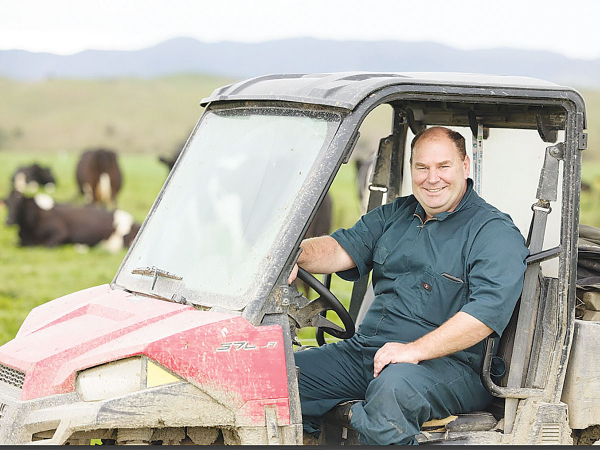 Andrew Hoggard
OPINION: Farmers and growers know the frustration well: Pointless paperwork, slow consents, and confusing red tape that turns simple tasks into complex ones.
As I mentioned in my last column, the rural sector still faces many challenges. While we're working to clean up existing issues, we also need to prevent future messes - those that arise when regulations are made without proper consultation, clear reasoning, or accountability.
At its core, the Regulatory Standards Bill (RSB) is built on a simple idea: good laws should be made well.
It doesn't stop governments from legislating on any issue - be it environmental protection, public health, or housing. It simply requires lawmakers to explain themselves. What problem is being solved? What are the costs and benefits? Who gains, who pays, and are we unnecessarily infringing on people's rights?
Bad regulation doesn't just cost money, it blocks progress. Developers abandon housing projects due to ballooning compliance costs. Community events vanish under excessive requirements. Even the climbing wall at Sir Edmund Hillary's old school now bears a "don't climb" sign - a symbol of regulation gone wrong.
The RSB addresses this by requiring a public Consistency Assessment Statement for every new regulation. This statement must evaluate proposed rules against key principles:
Necessity: What problem needs solving?
Clarity: Why this solution?
Personal liberty: Who's affected and how?
Respect for property: What's the impact on property owners?
The Bill also creates an independent advisory board - not to veto laws, but to provide expert scrutiny. Parliament still decides, ministers still act, but now they must show their reasoning. No more thumb-sucks or guesstimates.
During my time as Federated Farmers president, this Bill would have made life easier by spotlighting impractical regulations from Wellington. Even if it didn’t stop bad rules, it would have exposed them before they became law.
Take the winter grazing regulations. Bernadette Hunt’s appearance on breakfast radio helped expose their flaws, leading to changes within days. But they shouldn’t have gotten that far. Where was the necessity assessment? Where was the cost-benefit analysis?
This is exactly what the RSB aims to prevent. By asking basic questions we can catch flawed regulations before they do harm.
I believe the Bill will ensure that when property rights are restricted, there’s proper justification and, where appropriate, compensation.
This is an idea that faces strong opposition from the left, but If property rights matter to you, make your voice heard during the consultation process.
If this all sounds reasonable, you’re not alone. So why the backlash?
Sadly, some activist groups and opposition politicians have responded with misleading claims. Their objections reveal more about political strategy than the Bill itself.
Critics also claim the Bill undermines Māori interests because it doesn’t mention the Treaty. In reality, the Bill operates within New Zealand’s existing legal framework, which already includes Treaty obligations. It doesn’t override settlements, diminish rights, or exclude Māori participation. Nor does it require a Treaty analysis for every regulation; just as the Bill of Rights doesn’t demand one for every rights issue.
This Bill is about building a culture of careful lawmaking. It doesn’t handcuff governments, it demands better preparation. It asks politicians to justify decisions that affect your freedoms, property, and livelihood. In doing so, it strengthens democracy, improves public trust, and raises the standard of governance.
If critics spent less time crafting conspiracy theories and more time reading the Bill, they’d see it’s not radical, it’s responsible. It informs voters, improves regulation, and discourages poor lawmaking.
Sensible, transparent lawmaking may not grab headlines, but it helps New Zealanders live without unnecessary bureaucratic interference. The Regulatory Standards Bill is a practical step toward better governance; one that benefits everyone who’s ever been frustrated by regulations that solve imaginary problems while creating real ones.
It’s time to raise the bar for how laws are made in New Zealand. The Regulatory Standards Bill shows us the way forward.
Andrew Hoggard is the Associate Minister for Agriculture.
OPINION: Well, the silly season is upon us and all us politicians are running around shaking babies and kissing hands, or maybe the other way around.

It was billed as a chance for all the political parties to woo the rural vote, but question marks hang over just how effective this was.
There's been widespread support from the primary sector for the Government's announcement on changes to freshwater farm plans that come under the Natural Environment Bill, which is now set to replace the existing RMA.
A pause on Waikato Regional Council's (WRC) plan change that sets new freshwater rules for farming could be announced in the coming weeks.
New Zealanders are being urged to be alert following a confirmed positive case of H5 bird flu this week.



Entries opened on Monday, 5 October 2026 for the 2027 New Zealand Dairy Industry Awards (NZDIA), which organisers describe as the nation's biggest celebration of excellence in the dairy sector.

Waikato milk processor Tatua has again declared a record milk payout to farmer shareholders, leaving other processors in the dust.
A Labour-led Government won’t be bringing back the controversial freshwater rules of 2020.
National’s much-touted free trade deal with India featured in the Rural Issues Debate at Mystery Creek, Hamilton on Wednesday night.
New Zealand's 2026-27 freshwater fishing season has opened, with anglers encouraged to head to rivers and lakes over the coming days as conditions look favourable across much of the country.
Central Otago District Council (CODC) has voted against a plan to spread treated sewage sludge from Cromwell and Alexandra on farmland near Lauder, a decision Federated Farmers says reflects strong opposition from rural residents.