Kiwifruit Growers Prepare for El Niño, Stay Optimistic
Kiwifruit growers are watchful but remain optimistic as concerns around the potential effects of the El Niño weather pattern this season.
 increase font size
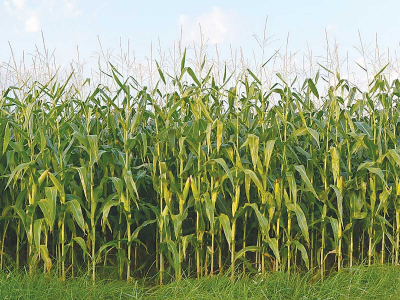 This year there are potential issues with both grass silage and PKE.
Feed shortages happen every summer. Ian Williams, Pioneer forage specialist explains some options to fill the feed gap.
As New Zealanders, we love to talk about the weather. We have NIWA predicting this and MetService predicting that and Mr Jones down the road predicting something else.
What is certain is that summer will follow spring just as spring followed winter. Also certain is that there will be periods of the summer months where there won’t be enough feed for animals. It happens every year.
How farmers deal with feed shortages varies hugely. Some simply let the animals go hungry and see production fall dramatically. Other farmers make the decision to fill feed gaps in order to keep their animals producing and growing. Normally feed gaps would be filled with a summer crop, grass silage or PKE.
This year, however, there are potential issues with both grass silage and PKE. While some regions have experienced good spring grass growth rates and made some silage, farms in other regions have made very little silage. With restrictions on the amount of PKE which can be fed, filling big summer feed gaps with PKE without pushing the animals into the C or D zones will be difficult.
Cropping: Historically farmers have filled summer feed gaps by growing a summer crop. Traditionally, this has been either turnips or forage rape. The problem with both these crops is that if you need them because it is dry then it is likely that they haven’t grown well because of the dry. Conversely, if you don’t need them because of good summer rainfall, they have probably grown well. Farmers tend to end up wasting pasture or making expensive, poor quality pasture silage.
In recent years, farmers have grown chicory, which has a deep taproot and seems to be a lot more resistant to the summer dry. The only problem with chicory is that relatively low yields mean a significant area of the farm needs to be planted in crop to grow the recommended amount of feed.
There are two other alternatives to the turnips, chicory and forage rape: these are greenfeed maize and forage sorghum X sudan or sudan x sudan grass hybrids (e.g. Bettagraze or SSS). The advantage of each are outlined below.
Greenfeed Maize: Maize is a tropical grass. It has high water use efficiency and tends to grow well in summer when other crops are struggling. While maize is best known for its use as silage it can also be a very valuable greenfeed crop.
The feed value for greenfeed maize is in the range of 10.3-10.8 MJME/kgDM, with higher energy levels being achieved as the grain content increases. Less mature crops can have crude protein levels as high as 16% but this drops to 8-10% as the cobs fill.
Crops can be break fed or chopped using a maize harvester or a flail-type mower. Feeding behind an electric wire reduces crop wastage from trampling. The good thing about greenfeed maize is that if you don’t need it you can harvest it for silage, store it and feed it when you need it. Greenfeed maize can be fed to dairy and beef cattle and it can be grown NZ-wide.
There are two cautions with greenfeed maize: first, don’t feed young or stress crops without checking nitrate levels and, second, take care when feeding mature crops which have high amounts of grain present. Limit access to the crop initially as the cows are likely to gorge themselves on the cobs and this may lead to acidosis or grain-overload.
Forage Sorghum X Sudan Grass Hybrids:These hybrids produce good yields of moderate quality feed in a relatively short time – an excellent option for summer feed in warmer districts. These are genuine summer loving plants and shouldn’t be planted until the soil temperature is 18°C and rising.
Usually planting takes place in the first week or December or later. Because of their rapid growth, crops can be first grazed or harvested (at 80 -100 cm in height) as little as 35 - 45 days after planting, with further regular grazings afterwards.
This crop shouldn’t be planted until early December, so you don’t need to decide to plant it until you have a better idea what the summer may look like.
There are different forms of these summer grasses. For example, Bettagraze is a forage sorghum x sudan grass hybrid with a high sugar content, fine stems and a high leaf-to-stem ratio. SSS on the other hand is a sudan x sudan grass hybrid which provides finer leafy stems and excellent regrowth potential.
If you are unsure what would work best, give your merchant a call and they will be able to guide you. As is the case with greenfeed maize, if the feed is not required it can be harvested as silage or hay and stored for later feeding.
It is recommended that farmers test forage sorghum x sudan grass hybrids for nitrate and/or prussic acid levels prior to feeding or ensiling. If the levels are high, contact your local vet or animal nutritionist for feed management advice.
• Ian Williams is a Pioneer forage specialist. Contact This email address is being protected from spambots. You need JavaScript enabled to view it.
Kiwifruit growers are watchful but remain optimistic as concerns around the potential effects of the El Niño weather pattern this season.

With forecasters advising El Niño conditions will develop through winter and strengthen into spring and summer, Ballance Agri-Nutrients is encouraging farmers and growers to think ahead about nutrient planning and be prepared to work around challenging weather conditions.
The transition period (typically defined as the three weeks prior to and the three weeks immediately after calving) sets the biological and productive trajectory for the entire lactation by determining how well the cow adapts from pregnancy to peak milk production.
As spring calving cows head into dry-off, the priority shifts to one thing: setting cows up to calve at the target body condition score (BCS).
Recent weather events in the Bay of Plenty, Gisborne/Tairawhiti, and Canterbury have been declared a medium-scale adverse event.


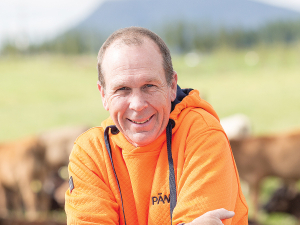
Pāmu has released its FY26 Integrated Annual Report, reporting a Net Operating Profit of $113 million, more than double the $49 million recorded in FY25.

Meat Industry Association data, released alongside the Red Meat Sector conference in Wellington, shows export value climbing across the US, China, UK and Canada.
Applications are set to open for the 2027 Zanda McDonald Award, a trans-Tasman award recognised for identifying and fast-tracking talented young leaders in agriculture and agribusiness.
The Royal New Zealand College of General Practitioners (the College) and Hauora Taiwhenua Rural Health Network are calling for investment in a proposed new training pathway for rural GPs, warning that many rural practices are struggling to recruit while a large share of the existing workforce nears retirement.
Federated Farmers has called on Central Otago District Council (CODC) to drop or vote down a plan to truck sludge from Alexandra and Cromwell to farmland near Lauder, warning it would compound an "outrageous" situation created by a separate council's decision weeks earlier.
Synlait has swung to second-half profit as operations stabilise, but the dairy processor still posted a $75.4m annual loss.