Herd-i Joins NZ Dairy Industry Awards as All-Region Sponsor
Agri-tech company Herd-i has become a new all-region sponsor of the New Zealand Dairy Industry Awards (NZDIA), the largest nationwide celebration of excellence in the dairy sector.
 increase font size
 2021 National Dairy Trainee finalists after their final day of judging, before heading off on the study tour.
Changes have been announced to the New Zealand Dairy Industry Awards programme.
The Dairy Trainee category has undergone major changes - the age range is now 18 years to 30 years - with a maximum of three years' experience from the age of 18.
The online entry form has also been simplified.
Additional conditions for visa entrants have been removed with no minimum length of time in New Zealand required.
The modifications to the Dairy Trainee age range recognises that traditional pathways into the dairy industry have altered.
"According to Primary ITO, the average age of a dairy trainee is now 32 years and we are seeing many career changers joining the ranks," says NZDIA general manager Robin Congdon.
"These changes acknowledge the awards programme as a learning platform which recognises trainees' achievements, drives personal development, allows them to grow industry networks, and use the programe to develop skilles along the way."
NZDIA executive dairy trainee member Raewyn Hills says there was a strong desire to enhance the judging to be more educational, fun and engaging.
"We have revamped the process and the preliminary round will have a Skills Day with a practical focus, which will appeal to all," she says.
"We will also give on-the-spot feedback and training on how to complete the practical tasks on the day meaning entrants will come away having leant something rather than just judged."
The new format will also allow more trainees to go through the programme in less time, which means less pressure on volunteer regional teams and judges.
The preliminary round of practical judging will produce six Dairy Trainee finalists from each region, who will progress to a face-to-face interview round, which also include a large verbal practical element to assess general farming knowledge.
"This is invaluable experience for the trainees and develops their communication and interview skills," says Hills.
Regional winners will continue to the national programme, which includes a study tour, practical testing, and the National Awards dinner.
"There is a real buzz about the changes," she says. "We feel they will reinvigorate an already fun experience and our regional teams and judges are excited to get the 2022 programme underway."
The New Zealand Dairy Industry Awards are supported by national sponsors DeLaval, Ecolab, Federated Farmers, Fonterra, Honda, LIC, Meridian Energy and Ravensdown, along with industry partner DairyNZ.
Registrations of Interest for the 2022 awards can be made via: www.dairyindustryawards.co.nz with entries opening on October 1.
Agri-tech company Herd-i has become a new all-region sponsor of the New Zealand Dairy Industry Awards (NZDIA), the largest nationwide celebration of excellence in the dairy sector.
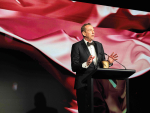
Entries are now open across eleven regions for the 2027 New Zealand Dairy Industry Awards (NZDIA).
Entries opened on Monday, 5 October 2026 for the 2027 New Zealand Dairy Industry Awards (NZDIA), which organisers describe as the nation's biggest celebration of excellence in the dairy sector.
The inaugural winners of the NZ Dairy Awards’ CowManager Experience prize say it will be a no-brainer to keep the technology in their farm business after experiencing the results.
Signing up to a benchmarking tool is not about competition, but about improving collectively, says Ximena Puig and Alvaro Luzardo who are 50-50 sharemilkers at a 164-hectare (effective) dairy farm in Eketāhuna in the Lower North Island.


New Zealand’s red meat sector has welcomed the India-New Zealand Free Trade Agreement taking effect, which removes India’s 33% tariff on New Zealand sheepmeat.

More than 95 per cent of New Zealand’s forestry and wood exports to India can now enter tariff free as the New Zealand-India Free Trade Agreement comes into force today.
Federated Farmers is backing Feilding High School’s call to keep Agriculture and Horticultural Science as a standalone subject in Year 11.
Food and fibre exports have returned a billion- dollar bonus to the country.
Zespri has welcomed the entry into force of the India-New Zealand Free Trade Agreement today, calling it a significant milestone that will support long-term growth in one of the world’s largest and fastest-growing consumer markets.
Southland's wet winter and spring will potentially cost Wyndham sheep and beef farmer Ben Dooley between $100,000 and $120,000 in lamb losses.