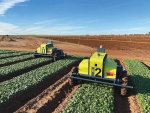
Kilter AX-1: First Autonomous Weeding Robot Lands in NZ
Claimed to be the first autonomous robot for New Zealand vegetables growers, the first Kilter AX-1 unit has arrived in the country.
 increase font size

A NEW robotic milker from GEA Farm Technologies WestfaliaSurge will have technology not seen before on robotic systems, including a specially developed 3D camera.
This new unit, called Mlone, will bring robotics a step closer to more New Zealand farms, says GEA.
The camera plays a key part in coordinating the position of individual teats and determining where to place the cups at the start of milking. It effectively guides the teat cups on the milking rack to the cow’s teats.
The constant monitoring by the camera provides a more human-like response to unexpected events, like cups being kicked off, with a rapid movement back to the problem bail to correct the problem.
GEA business development manager Chris Barclay says integrated processes also ensure the MIone provides a high standard of teat care and cleanliness.
Once cupped the teat is cleaned, pre-milked, stimulated and milked out without requiring brushes or other external equipment, avoiding risk of cross contamination between teats or cows.
“The system individually washes, sanitises and dries the teats, then post-milking the cups are flushed and ready for the next cow.”
The MIone appears here just as the first plant is being commissioned on a Gippsland property in Australia, where a three box system there will be milking 120 cows initially.
Farm owner Trevor Mills says the system appealed because the design offered a true “milk centre” with the technology and equipment concentrated in one area of the plant’s configuration.
The system’s capability to operate 24/7 matches the increase in milkings per day that typically occurs under a robotic system.
“In systems overseas where cows are housed continuously and milked robotically they will tend towards three milkings over a 24 hour period, and typically milk volume harvested will lift by about 15%,” says Barclay.
New Zealand experience with robotic milking systems and conventional pasture feeding indicates cows will offer themselves for 1.8 to 3.3 milkings during 24 hours.
The change in technology usually also requires a change in mindset and work approach for farmers adopting it.
“Farmers who have gone to robotic systems say they don’t necessarily work less, but they work differently, and have more time to spend on different areas of herd management, and are less constrained by the usual conventional milking demands.”
GEA managing director Jamie Mikkelson says the MIone is the culmination of much R&D work by WestfaliaSurge and is supported by staff skilled in integrating robotics with NZ pastoral systems.
www.gea-farmtechnolgies.co.nz
Claimed to be the first autonomous robot for New Zealand vegetables growers, the first Kilter AX-1 unit has arrived in the country.
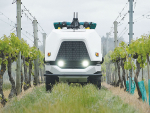
Tauranga-based Robotics Plus has launched its autonomous multi-use, modular vehicle platform for agriculture.
Global giant Deere and Co has acquired Silicon Valley start-up company Bear Flag Robotics, which specialises in autonomous driving technologies for existing plant and machinery.
A small Waikato dairy farm with one Lely Astronaut A4 robot has proven that robotic milking is also effective with a small herd.
Delaval says its latest addition to the VMS product line, the new V310 detects heat and pregnancy automatically during the milking process.


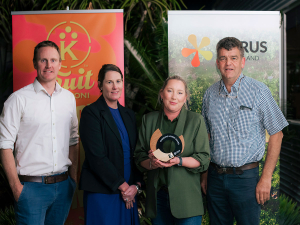
New Zealand's citrus growers were challenged to build their future on the value embedded in their fruit rather than the volume they produce, at Citrus New Zealand's annual gathering in Gisborne on 17 September.
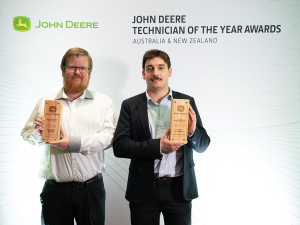
Leading John Deere technicians and apprentices from New Zealand and Australians were recognised at the recent sixth annual JD Technician of the Year Awards, held in Brisbane.
In Dacre, near Invercargill in New Zealand’s South Island, Bruce Dinnington is running a dairy operation unlike any other.
A free online platform aggregating governance vacancies across rural and regional New Zealand has been launched.
Environment Minister Nicola Grigg has announced details of a new rural plastics recycling scheme.
Agricultural drone operators say that a government decision to allow lower-risk drone work without certification won’t lower standards but drive innovation and efficiency.