Mixer makes feeding easy
Coolbreene Trust near Taupo is a large-scale dairy operation farming 1150ha, including run-off blocks, within a 10km radius of its home base.
 increase font size
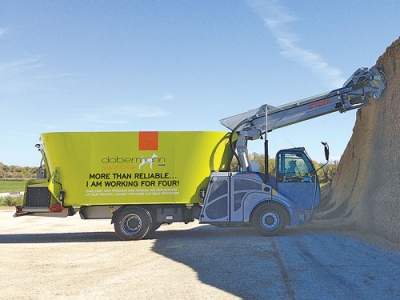 Storti’s self-propelled, self-loading mixer wagon.
One of the more interesting first-time exhibitors at National Fieldays was Storti, from Verona, NE Italy, showing a self-propelled, self-loading mixer wagon. This large machine was catching the eye of large scale dairy farmers.
Dating back to 1956, this company has extensive knowledge of the total mixed ration (TMR) market, evidenced by its range of trailed and self-propelled machines from 8-33m3 with vertical or horizontal mixing.
Most types of machine are also capable of self-loading, with a hydraulically driven cutter head on a loader arm mounted on the rear or front of the machine in the case of the self-propelled units. This has the major advantage of not needing a dedicated loader tractor, or in the worst case having to unhook the mixer wagon, load up, then re-connect to carry out a mix, which is very time consuming.
Storti marketing manager Ignacio Nunez mentioned standout features of the Doberman model on display: high efficiency rotor for a homogenous mix and low power consumption, bi-directional loading arm to suit all types of material being loaded, and heavy ladder construction chassis.
He also pointed out options such as the in-built weight system and the single lever control of the whole unit.
Nunez also announced the recent signing of a distribution agreement for New Zealand with Robertson Manufacturing, Canterbury, well known for their bale and silage feeders.
Robertson sales manager Tyronne Campbell commented, “The addition of Storti to our product offering allows us to cover the whole spectrum of animal feeding, and the decision to join forces with Storti is based on their worldwide reputation for experience in the TMR field.”
Robertson plans countrywide demonstrations of the Doberman self-propelled machine.
Tel. 03 303 7228
Coolbreene Trust near Taupo is a large-scale dairy operation farming 1150ha, including run-off blocks, within a 10km radius of its home base.
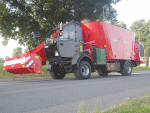
A self-propelled, twin vertical auger mixer wagon from KUHN dubbed the SPW Intense has been designed with nutritional considerations in mind.
Manufacturers of total mixed ration (TMR) mixers should stop claiming their machines have “better steel, bigger tyres and brighter lights” than competitors’ machines.
New from Irish manufacturer Keenan is a self-propelled diet feeder/mixer built with its Italian partner Storti.
A recently introduced premium range of goat feeding equipment from Stallion Plastics should hit the shelves in time for this year’s kid rearing season.


Good medium to long term prospects for NZ beef, especially in the US, has heighted the focus on various initiatives to capitalise on this situation.
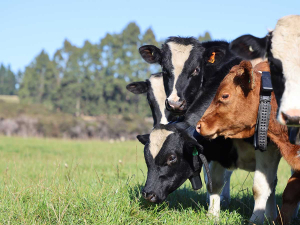
High country stations, mixed sheep and beef farms, Māori-owned farms, corporates and family operations are among the nine commercial farms taking part in the Livestock Innovation Farming Transformation programme, known as LIFT.
OPINION: New health and safety guidance unveiled by the Government recently provides farmers greater certainty about what is expected of them when managing risks on farm.
The National Animal Welfare Advisory Committee (NAWAC) is seeking public feedback on proposed changes to the Code of Welfare for Rodeos.
A New Zealand initiative supporting farmers to restore the health of grazing landscapes has received international backing through the Regenerative Fund for Nature, a global collaborative fund supporting regenerative agriculture and the communities that produce natural fibres for the fashion industry.
Combine premium New Zealand products, blend in a family ritual and what do you get? A world-class functional drink.