A new digital platform by Claas, that went live in over 30 countries on October 1st, provides a direct link to all digital solutions in the Claas product world, while also connecting farm employees, managers, machines and dealerships.
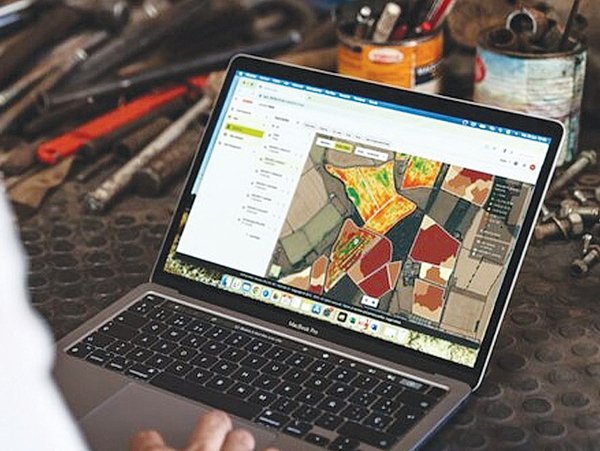
From the tractor, harvester and implement, the system incorporates machine management to farm management, in the cab, via a mobile device or in the farm office.
Claas Connect provides visibility of machine location and progress, allowing workflows and machine performance to be analysed and improved in a purposeful manner. Additionally, communication via the app and CEMIS 1200 makes farm machine data available on the go, to help simplify fieldwork for farm managers and employees.
Since the start of 2024, around 200 beta customers in five countries have been testing the system, enabling valuable practical experiences to be incorporated into the standard version.
The new Claas Connect combines digital solutions for machine management, farm management and Claas Service in one user interface with one Claas ID. That Claas ID is issued on registration and can be assigned different roles in different organisations.
Claas claims to have over 25 years of expertise in digital solutions for machines, with milestones including yield mapping on the Lexion and the Agrocom, Telematics and 365Farm- Net software solutions. Drawing on that experience and discussions with customers, Claas Connect offers a user-friendly, cloud-based system, with access to all Claas digital solutions and services.
On the practical front, users can register at any time, even before purchasing a Claas machine. They can create their desired machine in the Claas product configurator and request an offer and a demonstration.
All Claas machines and implements are added to Claas Connect on delivery, including all relevant data, documentation and licences, while users also get instant access to the Parts Shop, the dealership details and maintenance and service topics such as the Lubricant Advisor.
Users can add nondigital machines and implements to Claas Connect, with data from the third-party machines transferred to Claas Connect via DataConnect and ISO-XML task management.
Claas Connect is fully customisable by using different licences, so users can configure it to suit their needs, with a free 5-year Machine Connect licence as standard. This displays service, maintenance and error messages and indicates the machine’s software status. In addition, it provides in-depth insights into machine deployment based on operating-time analyses, machine comparisons, daily reports and campaign reports as well as displaying tank fill levels, operating hours and machine settings (e.g. engine droop, chop length and concave gap).
Further licences include Comprehensive Farm Management and Precision Farming functions that can be added to Claas Connect by purchasing Farm Connect, Field Connect and Fleet Connect licences – all offered with a 30-day free period.