Apple industry housing workers
Hawke's Bay's apple industry will spend $30 million on building accommodation totalling 1500 beds for RSE (recognised seasonal employment) workers.
 increase font size
 Aztech Building says its structure design suits animals.
A guide to cow house design “suits the needs of the dairy system and is an aid to farm profitability,” says its publisher, Aztech Building.
Sales manager Simon Clare says the company’s designs suit animals and the demands of milk production rather than human or construction preferences.
He says in a typical North Island dairy farming scenario, farmers want the ability to stand their cows off in a hybrid scenario, rather than the intensive 365 day/year model.
“It’s intended to improve the pasture based farming system, using the cow-in-the-paddock model, but in the wet months standing the cows off.
“However, farmers are finding benefits [during hot weather, from housing’s] lower temperatures and shade reducing cow heat stress…, which is a costly inhibitor to profitability, estimated at up to 2L of milk/day/cow during summer.”
Clare says the company works to optimise the design and ventilation of each structure to make conditions more consistent and comfortable for the cows, so they can convert that feed into milk more effectively.
Its clients have many different reasons for wanting dairy housing, and a one-size-fits-all solution does not necessarily maximise a farmer’s return on investment.
“At the start of the process we ask what the farmer is hoping to achieve,” he says.
“He may want to reduce land costs, increase stand-off ability, get more out of cows by taking them out of the heat…. Taking the stormwater component out of the effluent by using the roof to divert it is a massive benefit.”
The company consulted such industry experts as Dr Sue Macky, clinical veterinarian, dairy cow nutritionist and principal dairy consultant at Dairy Production Systems.
Clare says Macky referred to a lot of misguided perceptions about needing to keep cows warm, when in fact a cow’s optimum ambient temperature is below 15oC.
“Something cold to a human is not cold to a cow,” Clare says.
“The ideal cow environment should be unpleasantly cold to a human. The critical thing is air movement, so in all areas we try to maintain the optimum 2.5-5m3 second.”
Tel. 0800 298 324
Hawke's Bay's apple industry will spend $30 million on building accommodation totalling 1500 beds for RSE (recognised seasonal employment) workers.

Farmer groups are backing Government proposals to prevent productive land from falling to housing development. Horticultural land is especially in view.
Farmer groups are backing Government proposals to prevent productive land from falling to housing development.
The timber industry believes the government's announced boost to home construction, through a Housing Infrastructure Fund, needs to have a timber focus.
Wiht tight budgets this year, inexpensive improvements can be made to improve calf housing and conditions, says SealesWinslow nutrition and quality assurance manager, Wendy Morgan.


Alliance is calling for final applications for its 2027 Graduate Programme, with applications closing on Sunday 25 October.
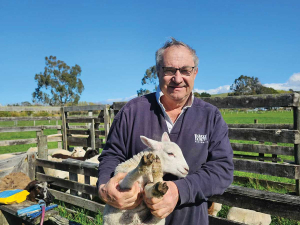
Decades piloting planes has ensured vet and farmer David Hayes is focused on safety. So, after a serious accident while welding on farm, he is sharing his experience so others can learn from it.
Canterbury milk processor, Synlait Milk has confirmed Leon Fung as its chief executive officer.
OPINION: Making it easier to collect rainwater and use it to grow crops and livestock is a no brainer.
As part of its Election 2026 coverage, Rural News asked political parties how they would help pull the arable sector out of the doldrums. Here's what they said:
Farmers are being encouraged to rethink how they manage waste on farm with the launch of ruralwastesorted.co.nz, a new website bringing together practical tips, real farmer experiences and resources.