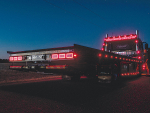
Make your trailer visible at night
With the recent changes to daylight saving and nights drawing in, there is still plenty of traffic on rural roads after dusk.
 increase font size
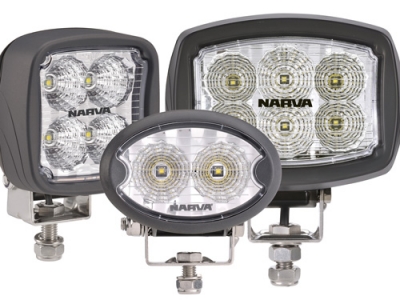 The Narva LED work lamp range.
The shift to LED work lamps in recent times reflects their performance and benefits such as low current draw and a greater resistance to shock and vibration, giving a longer product life.
LED lamps emit a whiter, brighter light than halogens, better illuminating workplaces with light that closely resembles natural daylight.
The Narva LED work lamp range meets the NZ EMC standard CISPR15, so users won't suffer the radio interference that can be an issue with some other work lamps.
Upgrades to some models include increases in light output by as much as 60%, achieved by moving from 3W to 5W LEDs in some variants, and from 5W to 10W LEDs in others. Despite the increase in light output, current draw remains low: the smallest draws 0.58A and the largest just 3.0A (at 12V).
Looks are sleek and modern, and strength and durability are high: the polycarbonate lenses are claimed virtually unbreakable and the mounting hardware is heavy-duty stainless steel.
The lamps come in three sizes, each available in either the standard grey finish or white for marine applications -- the latter using 316 stainless steel fittings.
Across the range, the light output ranges from 900 Lumens for smaller oval models to 4800 Lumen rectangular work lamps with six 10W LEDs. A five-year LED warranty applies.
With the recent changes to daylight saving and nights drawing in, there is still plenty of traffic on rural roads after dusk.

With shortening days meaning the need for good lighting is even more important out on the farm, it might be time to upgrade your illumination.
Originally available with amber lenses only, Narva’s ‘Geomax’ Heavy Duty LED Strobe Beacon light range has been upgraded with the addition of amber/clear, blue and green options.
High quality, reliable lighting is essential for anyone involved in agriculture or the great outdoors.
Narva's new Aeromax LED Rotating Beacons are said to offer big performance and durability.



National’s pledge to introduce 19 new national standards shows the party is serious about getting Wellington out of farming, Federated Farmers says.
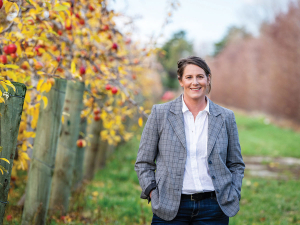
The National Party’s policies to make it easier to grow fresh vegetables, secure reliable water and energy and simplify farm planning are practical changes that will give growers the confidence to invest, according to Horticulture New Zealand (HortNZ).
Fonterra Co-operative Group chief financial officer Andrew Murray has resigned to take up a role outside the dairy giant.
A major move is about to get underway to improve the quality and viability of dairy beef and cattle in NZ.
Veterinarians say changes to the code of welfare for dairy cattle provides a positive foundation for improved cattle welfare across the country.
Today, 15 October, is the International Day of Rural Women, which recognises rural women’s contribution to farming, communities and the environment.