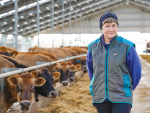
Susan O'Regan Appointed New Chair of QEII National Trust
Minister of Conservation Hon Tama Potaka has appointed Susan O'Regan as Chair of the Queen Elizabeth II National Trust (QEII) for a three-year term.
 increase font size
 Waikato dairy farms will be monitored again from the air by Waikato Regional Council staff.
Pinpoint aerial surveillance of Waikato dairy farms has been voted in by Waikato Regional Councillors as a ‘risk management’ move on farmers suspected of poor effluent handling.
But it will not be blanket watching of any and every farm, a practice stopped in 2014 when the milk payout turned downward.
Farmers said then that they found the monitoring stressful and intrusive and that they had nothing to hide.
Councillors voted 10 to 3 to resume surveillance. Some say non-compliance is increasing among farmers who believe they can get away with it in disregard of its impact on the environment.
The councillors heard that an ‘effluent review’ three years ago -- farm visits by council staff -- had been dropped in favour of working with farmers and landowners to tackle the issue.
But now the council estimates 808 (19%) of Waikato’s 4255 dairy farms do not comply with the rule that effluent storage must be effective 365 days of the year.
The council will mount an aerial watch on these farms rather than blanket survey all farms.
Councillor Stu Husband, a dairy farmer at Morrinsville, opposed the move, calling it “a huge step back for this council”. He said the correct approach is to visit farmers, identify the problem and make a plan to put things right.
The 19% non-compliance figure is misleading, Husband said. 95% of farmers comply with the rules but might have management issues at certain times of the year.
“We don’t like being spied on when the farms we operate are also our homes,” Husband said.
Helicopters are another way for council staff to ensure farmers’ compliance, said WDC resource use director, Chris McLay.
“We are not seeking a blanket aerial monitoring initiative; we just want to target high-risk properties,” he said.
Te Aroha dairy farmer Andrew McGiven, the Federated Farmers Waikato president, said Feds agreed in 2014 with the stopping of helicopter surveillance, but times have changed and farmers now need to be seen doing things properly.
“We understand the new regime will be one of risk management, i.e. identifying farms with poor or borderline storage and discussing remedial actions face to face.
“We also understand this work will be done using the latest technology such as real-time satellite systems -- less invasive than helicopters and better value for ratepayers.”
Minister of Conservation Hon Tama Potaka has appointed Susan O'Regan as Chair of the Queen Elizabeth II National Trust (QEII) for a three-year term.
Farms across the upper North Island are trialling different pasture mixes as part of a research programme that aims to build greater resilience into farming systems.
The Government has announced it will pause key parts of Waikato Plan Change 1 (PC1) in a decision that is set to give Waikato farmers a reprieve from new consenting and farm-planning requirements while the wider resource management system is overhauled.
When Fraser Hasnip returned to his family farm in Pirongia, Waikato, he saw an opportunity to do things differently.


Farmer-owned fertiliser company, Ballance Agri Nutrients is welcoming National’s plan to negotiate security agreements with key supplier countries to protect New Zealand-bound products from export restrictions and greater supply chain certainty.
Carrfields has announced the appointment of Stu Hall to the newly created role of chief operating officer, Carrfields Ltd, reflecting the continued growth of their agribusinesses and the need to ensure the company has the leadership capacity and support in place as it pursues the emerging opportunities ahead.
New Zealand's role is not to compete with Indian growers, according to NZ Apples and Pears.
The potato industry is celebrating the success of two rising stars - James Blair, the 2026 Young Grower of the Year and runner-up and innovation award winner, Amber Davy.
Twenty-eight emerging leaders from across the horticulture sector spent two days last month learning valuable skills and connecting with industry experts.
There are five entrants in this year’s Young Horticulturist of the Year, competing in a series of technical, practical, business and leadership challenges.