'Regulatory Middlemen'
OPINION: Groundswell's opinion of the incumbent farm industry representatives isn't high.
 increase font size
 Irrigation NZ chief executive Karen Williams.
Irrigation NZ is warning that the government's Resource Management Act (RMA) reform risks falling short of its objectives unless water use for food production and water storage infrastructure are clearly recognised in the goals at the top of the new system.
In a comprehensive submission on the Natural Environment Bill and Planning Bill, IrrigationNZ emphasises that how the goals are framed will determine how the entire regime is interpreted - from national direction through to regional plans and consent decisions.
"The goals are the lens through which everything else will be read," says chief executive Karen Williams.
"If water use is framed primarily as something to be constrained, that signal will flow through the whole system. The legislation must clearly reflect that while water must be protected, it must also be responsibly used within environmental limits."
Williams says IrrigationNZ wants to see water storage and distribution infrastructure explicitly recognised alongside other essential infrastructure.
"Transport and energy networks are clearly recognised as essential, long-lived infrastructure. Water infrastructure deserves equal recognition. These are multi-decade investments that underpin food production, regional economies and community resilience. If we want water in the right place at the right time, that enabling infrastructure must be written into law."
Without storage and distribution systems, water cannot be captured when abundant and made available when scarce - limiting New Zealand's ability to manage flood risk, support environmental flows during dry periods, and maintain consistent food and fibre production.
While IrrigationNZ supports reform that delivers clarity, simplification and stronger environmental outcomes, the organisation says the legislation must actively manage economic and community benefits within environmental limits - not treat them as secondary considerations.
The 'How' Is Missing
The IrrigationNZ submission also raises concern that signficant operational detail has been deferred to secondary legislation and future national direction, alongside broad regulation-making powers.
"Too much of the 'how' is missing," says chief executive Karen Williams.
"Without clearer guardrails in primary legislation, future changes could materially shift how water is managed without full scrutiny. That undermines confidence for longlived infrastructure and intergenerational investment.”
IrrigationNZ represents nearly 5,000 members nationally, including irrigation schemes, irrigated food and fibre producers, and infrastructure operators responsible for billions of dollars in assets.
“For our sector, certainty is not a nice-to-have - it directly affects food security, regional resilience and investment decisions that span decades,” says Williams.
“We support reform. But the goals must embed balance at the top of the system. If they don’t, the reform will not operate as intended.”
Williams says New Zealand has a strategic advantage in water, but only if it is managed with foresight.
“Water is one of New Zealand’s shared strengths. Protecting it and using it responsibly are not competing ideas. They must sit together in legislation. If we get this right, the reform can deliver the balanced outcomes New Zealanders expect.”
OPINION: Groundswell's opinion of the incumbent farm industry representatives isn't high.

There's been widespread support from the primary sector for the Government's announcement on changes to freshwater farm plans that come under the Natural Environment Bill, which is now set to replace the existing RMA.
I think it's going to greatly weaken National at the election. That's the view of a former senior National MP on the recent attempted coup against Prime Minister Christopher Luxon.
Despite political shenanigans in Wellington, farmers are confident that Resource Management Act (RMA) reforms will get over the line in this term of Parliament.
A pause on Waikato Regional Council's (WRC) plan change that sets new freshwater rules for farming could be announced in the coming weeks.


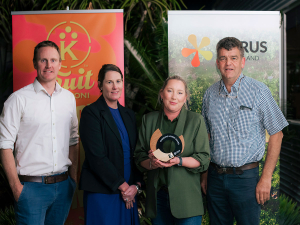
New Zealand's citrus growers were challenged to build their future on the value embedded in their fruit rather than the volume they produce, at Citrus New Zealand's annual gathering in Gisborne on 17 September.
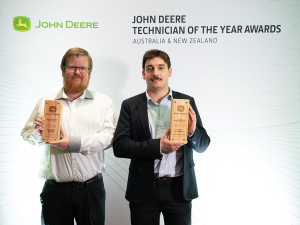
Leading John Deere technicians and apprentices from New Zealand and Australians were recognised at the recent sixth annual JD Technician of the Year Awards, held in Brisbane.
In Dacre, near Invercargill in New Zealand’s South Island, Bruce Dinnington is running a dairy operation unlike any other.
A free online platform aggregating governance vacancies across rural and regional New Zealand has been launched.
Environment Minister Nicola Grigg has announced details of a new rural plastics recycling scheme.
Agricultural drone operators say that a government decision to allow lower-risk drone work without certification won’t lower standards but drive innovation and efficiency.