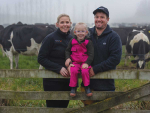
“They are some of the best farmers we know and they’re going through hell.”
In countries where the disease is established it has a big impact, causing a nasty untreatable mastitis. Cows are culled and the disease goes quiet for a year or two then flares up again.
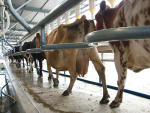
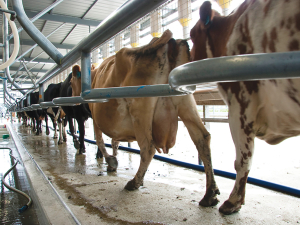
“It doesn’t go away; it survives in biofilms -- all those crevices in milking sheds and milking machines,” Morley explained. “It survives in the animal. And if they’re not stressed, sometimes it has no effect.”
Morley says that of the seven NZ farms with positive detections, two of the Van Leeuwen properties were having “real problems,” with serious mastitis and arthritis in calves that had drunk milk from infected cows.
But there were no clinical signs on the other positive properties, including the Rangiora lifestyle block and the calf rearer south of Oamaru.
“There was no sign of sickness. Those calves were really nice calves. There was nothing going on.”
Morley says the response team had done a lot of work assessing what it would cost dairy in the long term if not eradicated.
“Over 10 years we are talking hundreds of millions [of dollars] in impact to the industry. It’s a big number.”
It would also impact the meat industry, where there was increasing talk of the rising value of ‘fifth quarter’ products. Mycoplasma is very hard to take out of those products, he said.
However, confidence is building that eradication is possible.
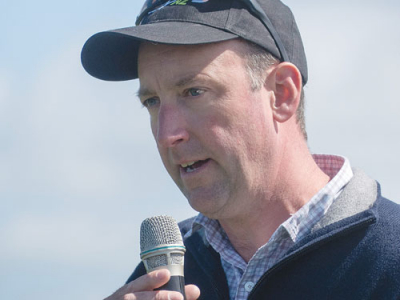
“Unlike foot and mouth disease this doesn’t jump over the fence on the wind,” Morley adds. “We can contain it. I’m really optimistic that this might be one of those purity incursions that NZ can stop and will stop, unlike myrtle rust and velvetleaf and other things we struggle with.”
Meanwhile, Norton attacked the attitudes of those who believed the battle is already lost, saying the defeatists “need to be lined up in front of a firing squad”.
There has not been a single ounce of evidence of a spread.
“We will get eradication,” he said.