Massey Uses Portable Analyser to Measure Pasture Soil GHGs
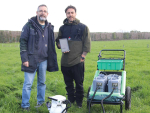
Researchers at Massey University are using a special piece of scientific equipment to improve the measurement of greenhouse gas emissions from pasture soils.
 increase font size
 The animal handling facility at the new Dairy 4 Farm.
Work is close to completion on Massey University’s Dairy 4 Farm, after the university partnered with AgResearch to boost on-farm research capability and facilities in the lower North Island.
The facility will enable greater interaction between staff and students of Massey and AgResearch, while also providing scope for a range of independent trials to operate at any one time.
The Dairy 4 Farm, adjacent to Massey’s Manawatū campus, has approximately 600 spring calving cows and is the largest of the university’s two farms.
Professor Paul Kenyon, Head of Massey’s School of Agriculture and Environment, says the new facilities will enable detailed research projects on the farm to be carried out at the same time as usual operations.
“The new facilities will boast two rotary milking platforms which will allow detailed research projects to take place alongside the farm’s daily operations. Other new facilities include a covered veterinary area for individual cow measurements and a multi-lane feed pad to enable differential feeding to various groups of cows. There will also be an effluent treating system, a data centre within the shed to store and manage research data, a teaching room and a biosecurity station.
The partnership with AgResearch will help Massey build on its reputation of contributing world-leading pure and applied research, in partnership with industry, on matters that are of national and international interest including environmental impacts of climate change, biosecurity issues, animal welfare issues and economic threats posed by innovations in food production,” Kenyon adds.
AgResearch Science Objective Leader and Principal Scientist Dr David Pacheco says it is rewarding to see the progress at the farm after the decision several years ago to invest with Massey in its development.
“With the expanded facilities available to us at the Dairy 4 Farm, we will be able to grow our science in critical areas such as greenhouse gas research, animal nutrition and health, through to finding ways to increase the value of New Zealand’s dairy products,” Pacheco says.
“Our partnership with Massey means we can make the most out of combining our resources and expertise, while the close physical proximity of the farm to our respective facilities in Palmerston North makes everything simpler and more efficient. That close collaboration also means together we can develop the next generation of researchers to tackle the complex issues that New Zealand and the globe is facing.
“All of this benefits our dairy industry in New Zealand, and ultimately New Zealand as a leading international dairy producer.”
The Dairy 4 Farm is well known for its research into nutrient losses on heavy soils and recent collaborative work on partial housing systems for dairy cows. It has been operating for approximately 46 years and complements Massey’s Dairy 1 Farm - a 260 cow farm beside the Manawatū River.
Researchers at Massey University are using a special piece of scientific equipment to improve the measurement of greenhouse gas emissions from pasture soils.

Interest in agritech and production animal systems has prompted Massey University's School of Agriculture and the Environment to new majors to its popular animal science degree.
The industry is crying out for graduates with agricultural related degrees.
A four year trial has reaffirmed that mixing plantain into dairy pastures can help reduce nitrogen losses to freshwater while maintaining milk production and profitability, say researchers.
Special courses for secondary school teachers to help excite kids about agriculture and horticulture are now being run at Massey University.

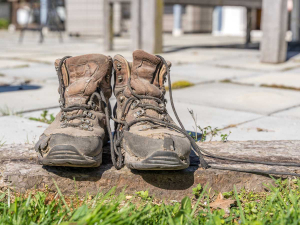
Safer Farms is urging farmers to make sure everyone working on farm has safe, suitable footwear for the job.
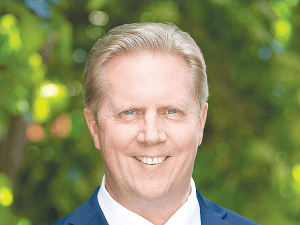
The Government is backing work on a community-led water storage scheme that could irrigate up to 11,000 more hectares of the Poverty Bay flats, Agriculture Minister Todd McClay says.
Agri-tech company Herd-i has become a new all-region sponsor of the New Zealand Dairy Industry Awards (NZDIA), the largest nationwide celebration of excellence in the dairy sector.
Four candidates have been confirmed for two director positions on Fonterra’s board.
Returning to the family dairy farm after playing 20 years of professional rugby around the world is no easy task.
After delivering another record farmgate milk price to 100 supplying farms, independent milk processor Tatua is entering thee new financial year with a positive outlook.