Resilient Global Dairy Industry Overcoming Volatility
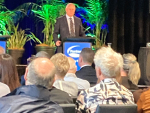
Fonterra chief executive, Richard Allen says being resilient has helped the dairy industry overcome extreme volatility in recent years.
 increase font size
 Fonterra Co-operative Council chair John Stevenson says the divestment proposal is very significant for the co-op given its size and value.
Fonterra shareholders are being urged to deliver a strong and clear mandate on the proposed $4.22 billion sale of consumer and related businesses to Lactalis.
Fonterra Co-operative Council chair John Stevenson says the proposed sale is a strong proposal for Fonterra shareholders to consider and he wants shareholders to attend farmer meetings and webinars over the coming weeks to learn more about the divestment - seen as one of the biggest decisions since Fonterra's formation.
"The divestment proposal is very significant for our co-op given its size and value," he told Dairy News.
"It will also change what Fonterra looks like post any divestment."
Stevenson says the council is of the view that it is really important that shareholders look at the proposal when it comes out in the notice of meeting, understand what it means, and vote.
"The decision we are being asked to make is important for the future of our co-op.
"A decision of this scale demands a strong and clear mandate, both in terms of voting participation and the level of support. Fonterra has a comprehensive plan for engaging with farmers, so I encourage all shareholders to try to attend one of the farmer meetings or webinars, and when the time comes to exercise their voting entitlement."
Fonterra will issue a notice of meeting next month and a special general meeting is likely in the first week of November
Lactalis, a family-owned business headquartered in France, will buy Fonterra’s global consumer business (excluding Greater China) and consumer brands; the integrated foodservice and Ingredients businesses in Oceania and Sri Lanka; and the Middle East and Africa Foodservice business, plus Bega licences held by the Australian business.
The Bega licence issue was resolved last week, boosting the sale price by $375m. Fonterra will return $2/share to farmer shareholders.
Stevenson says it is great to have the dispute with Bega Cheese resolved and for farmers to have certainty around the inclusion of the Bega licences in the sale.
Fonterra chairman Peter McBride expects a strong mandate from farmers shareholders. For the sale to go ahead, 50.1% of voting Fonterra farmer shareholders must vote yes.
McBride says a series of webinars are being held where the co-op will brief farmer shareholders.
Fonterra directors and management will also use their roadshow meetings, scheduled after its annual result announcements next month, to sell the proposal. McBride expects strong farmer interest at the meetings.
“Often with farmers, when you have a good set of results, you don’t get a good turnout, but I think we’re going to get one this time,” he says.
He also expects an easier round of consultation compared to its capital structure in 2021.
“When I compare this consultation to capital structure, I’d say this would be an easier road to go down, so we’re looking forward to it.
“We require 50.1% approval to go ahead with the sale, but we’re looking for much more than that, and we’re looking for a really high turnout. That’s an important part of this.”
McBride says, since the announcement, he has received a flurry of texts and messages – all positive. “They’ve obviously heard about some of the value that’s been bandied around. Now they’ve seen a real number, so I think it’s starting to hit home in terms of now they have a decision to make.”
Stevenson says the council has also received generally positive feedback from farmers on the proposed sale so far.
“Farmers have also told council that they have a deep connection to Fonterra brands, and that they are looking to understand the details of what Fonterra’s business looks like post any divestment.
He says shareholders will welcome a $2 return of capital.
“This is also big news for the economy of the rural communities within which we all operate.”
Fonterra chief executive, Richard Allen says being resilient has helped the dairy industry overcome extreme volatility in recent years.

Northland farmer Greg Collins has taken over as chair of the Fonterra Co-operative Council.
Fonterra’s 2026 financial year was a year of delivery, with record volumes of milk collected, processed and shipped by the co-op.
Dairy farmers, still holding onto their Fonterra shares despite switching milk supply elsewhere or exiting the industry, now face a stricter share sell-down requirement.
Milk powder prices are continuing their merry run, firming up a potential $10/kgMS farmgate price this season.

During the nesting season, from September to December, industrious starlings can quickly build nests in the darker areas behind tractor and vehicle, usually close to hot engines, typically resulting in localised damage or in some cases complete write-offs.
The meat processing industry is much more collegial than it was in the past and is now more focused on common goals.
With the last couple of months having seen some potential tractor purchases put on hold with the impending election and continued input cost rises, year-to-date figures, ending September, has seen deliveries up around 5% over the same period in 2025, with a total of 2026 units.
Beef+Lamb New Zealand is calling for nominations for director roles in the Northern South Island and Northern North Island electoral districts.
Fonterra chief executive, Richard Allen says being resilient has helped the dairy industry overcome extreme volatility in recent years.
The head of the Ministry for Primary Industries (MPI) trade and international relations group says New Zealand is well-positioned to secure trade access and compete internationally as the world becomes more complicated, demanding and uncertain.