New Rural Recycling Scheme to Replace Voluntary Farm Plastics Programmes by 2027
Environment Minister Nicola Grigg has announced details of a new rural plastics recycling scheme.
 increase font size
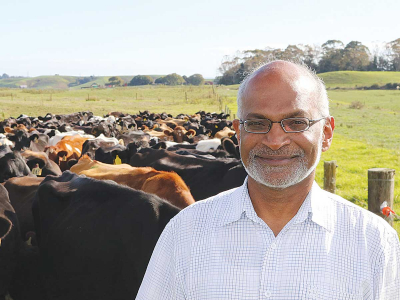 Nathan Balasingham.
An Auckland company believes reducing enteric methane through productivity gains is the way to tackle green house gas emissions.
In its submission on the Climate Change Response (Zero Carbon) Amendment Bill, Pukekohe-based Zest Biotech is calling for the Government to follow the Food and Agricultural Organisation’s lead on the issue.
Zest Biotech founder Nathan Balasingham says the biogenic methane reduction plan in the Zero Carbon Amendment Bill could be difficult to manage, but he sees an easier option.
“Livestock do not emit methane at a constant rate or intensity,” Balasingham said. “The gas comes out both ends and at a variable rate.”
He says lab and chamber based measurement techniques have “serious limitations”.
“Therefore, biogenic methane per se cannot be accurately measured. If we can’t measure it, it is difficult to manage it.”
The model to measure, report and manage emissions intensity has been developed by the FAO, called Gleam. It is compliant with IPCC Tier 2 methodology and ISO standards 14040 and 14044 (ISO, 2006).
Balasingham says this strategy also ensures the other global challenges - poverty alleviation and food security - are also addressed.
“Agricultural emissions should be viewed as valuable resources that are currently being wasted. Methane is energy lost and urea is protein lost (leading to nitrous oxide emissions).
“If we can improve the efficiency of ruminant animals, we will produce more milk and meat and less waste (emissions). We have the technology to reduce emissions intensity and increase ruminant efficiency.”
Balasingham says this means New Zealand could increase milk and meat productivity and achieve a gross reduction in emissions. It could make economic gains and comply with international standards, meeting market demands for ‘low carbon’ produce and meeting our global food security obligations.
Balasingham questions the Government’s rationale behind providing more financial support to Overseer. Instead of funding Overseer, the Government should back FAO’s Gleam, he says.
“We recommend the Government uses Gleam and support the development and implementation of mitigation tools and strategies that will provide real steps toward achieving the Climate Bill targets.
“If we implement the FAO recommended options, our farmers will be economically smart and climate smart farming champions. For every tonne of methane a farmer reduces, 86 tonnes of CO2 is offset. For every tonne of nitrous oxide they reduce, 298 tonnes of CO2 is offset.”
Existing technology
Nathan Balasingham wants the Government to look at existing technology to increase efficiency and reduce emissions.
He says Biozest, developed by his company, increases pasture resilience and productivity. When livestock graze the treated pasture, more pasture is converted to milk and meat and less is wasted as methane and urea: more profit, less gas and urea.
Biozest helps farmers to reduce greenhouse gases and their environmental footprint through productivity gains, in line with the FAO’s recommendations, he says.
He says Biozest can double pasture productivity, as well established in trials.
Environment Minister Nicola Grigg has announced details of a new rural plastics recycling scheme.

The Ballance Farm Environment Awards are coming to the West Coast of the South Island.
Climate, nature and animal wellbeing make up Fonterra's refreshed sustainability roadmap released last week.
Researchers at Massey University are using a special piece of scientific equipment to improve the measurement of greenhouse gas emissions from pasture soils.
There's been widespread support from the primary sector for the Government's announcement on changes to freshwater farm plans that come under the Natural Environment Bill, which is now set to replace the existing RMA.


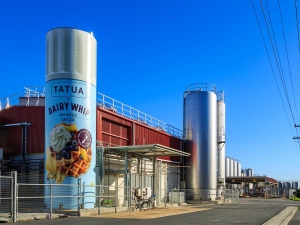
Waikato milk processor Tatua has again declared a record milk payout to farmer shareholders, leaving other processors in the dust.
A Labour-led Government won’t be bringing back the controversial freshwater rules of 2020.
National’s much-touted free trade deal with India featured in the Rural Issues Debate at Mystery Creek, Hamilton on Wednesday night.
New Zealand's 2026-27 freshwater fishing season has opened, with anglers encouraged to head to rivers and lakes over the coming days as conditions look favourable across much of the country.
Central Otago District Council (CODC) has voted against a plan to spread treated sewage sludge from Cromwell and Alexandra on farmland near Lauder, a decision Federated Farmers says reflects strong opposition from rural residents.
Pāmu has released its FY26 Integrated Annual Report, reporting a Net Operating Profit of $113 million, more than double the $49 million recorded in FY25.