What Would Synlait Be Worth to Fonterra or a2 Milk?
Speculation of a possible joint move by Fonterra and a2 Milk to buy Synlait raises a much bigger strategic question, says agribusiness expert Dr Nic Lees.
 increase font size
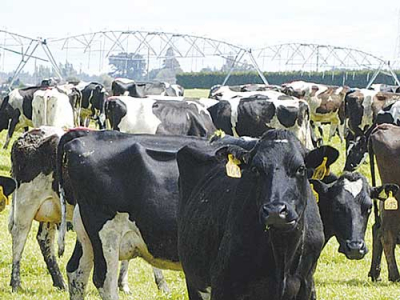
Failure to meet its own goals for reproductive performance (industry targets) has been much talked about at Lincoln University Dairy Farm (LUDF).
Farmers at a February 23 focus day debated the analysis presented and anecdotal comparisons with other farms in the region.
Taking a long term view, particularly if the current season is excluded, reproductive performance has improved on the farm over the past 13 years. But drilling into the detail reveals the farm only once met the industry target of 78% six-week in-calf rate (2013 mating period). Since then the trend in six-week in-calf rates has declined, raising many questions about what is limiting performance.
One bright spot for the farm was an increase in the overall number of yearling heifers in-calf. Last year the not-in-calf rate in the yearling heifers was 14% but this year it dropped back to 9%, or 6% after accounting for five free-martins. Amongst other changes possibly having influenced the yearling results was a return to AI, followed by bulls, and an increased focus on mineral management.
This year’s 63% six-week in-calf rate and 15% not-in-calf rate compares to 69% six-week in-calf and 13% not-in-calf rate last year. While the not-in-calf rate has been reasonably static at 12-13% from 10 weeks mating for a number of years, the six-week performance has decreased annually since 2013.
Detailed analysis of the herd’s reproductive performance, done for the farm by LIC, showed little influence from age, milk production, BCS at calving or animal health. As in past years, earlier calved cows were more likely to get back in calf than mid or late calving cows. But this becomes increasingly difficult each year as the declining six-week in-calf rate contributes more later-calving cows next season.
Adding to this, a conservative replacement rate (in part to reduce grazing expenses) and a desire to identify and cull cows with Johnes disease has in recent years given the farm little selection pressure and therefore no ability to remove later-calving cows.
Aware of high return rates in weeks four-six of mating, and uncertain of the effect of the viral disease Infectious bovine rhinotracheitis (IBR), LUDF increased its number of bulls and, rather than rotate these as is normal practice, kept all bulls out with the herds for weeks six-nine.
Past years have shown little gain in overall reproductive performance from bull matings, suggesting heat detection and conception rate was good in the AI period, and cows not mated at this time were less likely to get in calf.
This year, with fewer cows in calf at the end of the AI period, four weeks of bull mating resulted in the number of cows in calf lifting from 63% to 85%. It’s also likely that cows impacted by the above viral disease may have recovered by this phase in the mating cycle.
Early indications from this seasons Johnes testing suggest the farm may not have many Johnes cows to cull, providing some opportunity to cull a small numbers of cows which could include later-calving animals. Some short gestation semen was used in the herd, and this, coupled with the planned earlier calving of the heifers, looks as though the overall calving pattern will not be as poorly impacted as the six-week in-calf rate implies.
It does however keep the pressure on the one most certain factor likely to impact next year’s mating performance – the time between calving and mating.
For the season ahead, LUDF must keep looking for options to tighten the calving pattern and lessen the number of empty cows, and cows not in calf at the end of six weeks mating.
This will include anything learned from DairyNZ subclinical ketosis research, potentially increased use of short gestation semen, continued use of regular body condition scoring and proactive management of non-cycling cows.
• There is much discussion on the possible impact of fodder beet on animal perfomance. The LUDF herd has not been wintered on in recent years or fed fodder beet during lactation.
Speculation of a possible joint move by Fonterra and a2 Milk to buy Synlait raises a much bigger strategic question, says agribusiness expert Dr Nic Lees.

Lynnette Hudson's 30-year obsession with Pinot Noir was sparked working vintage in Burgundy, seeing how subtle changes in terroir were expressed in the glass. It was, she says, "an elightening moment in every way".
A four year trial has reaffirmed that mixing plantain into dairy pastures can help reduce nitrogen losses to freshwater while maintaining milk production and profitability, say researchers.
Twenty five secondary school students from around New Zealand recently completed a three day residential programme designed to explore career opportunities across the food and fibre production supply chain.
A Lincoln University student is set to become the first person to contest both the Young Viticulturist and the Young Winemaker national titles in one year.



Federated Farmers says it welcomes Labour's commitment to reviewing the Sharemilking Agreements Act, calling on other major parties to do the same.
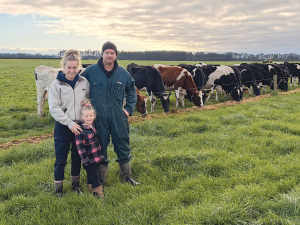
For Canterbury dairy farmers Sian Meijer and Rick Wobben, wearable technology has become one of their most valuable on-farm tools - helping manage 1850 cows across an expansive, high-performing dairy operation while improving efficiency, mating outcomes and day-to-day decision making.
Fonterra has unveiled its annual results for the 2026 financial year, posting $27 billion in revenue and close to $20 billion returned to New Zealand farmer owners and unit holders.
The first major update to the Dairy Cattle Code of Welfare in more than a decade has been released, marking what DairyNZ describes as an important step in ensuring animal welfare standards continue to evolve alongside scientific evidence and on-farm realities.
Ravensdown shareholders have elected Jane Montgomery and Kate Acland to the Ravensdown Board for three-year terms, following a closely contested director election.
Federated Farmers says new legislation replacing the Resource Management Act will cut red tape, unlock investment and help grow New Zealand's export-led economy, after the Planning Bill and Natural Environment Bill passed their third reading in Parliament yesterday.