Milk Powder Prices Prop Up Farmgate Milk Price
Milk powder prices are keeping farmgate prices up, helping processors offset the dip in milk fat prices.
 increase font size
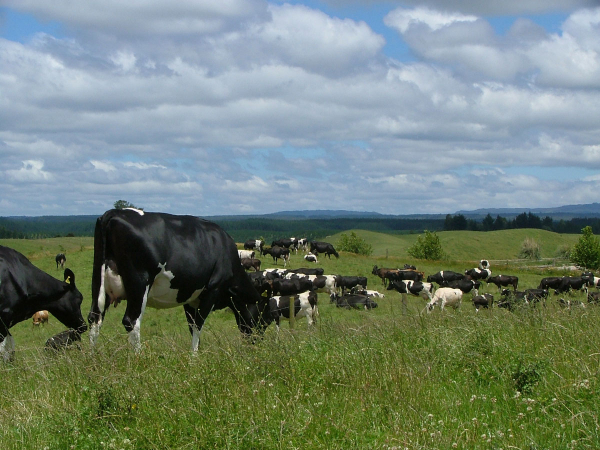 The overnight Global Dairy Trade auction saw the price index fall by 0.8% compared to the previous event.
New Zealand dairy prices are “still hanging in there,” relatively speaking, says US-based RaboResearch dairy analyst Tom Bailey.
The overnight Global Dairy Trade auction saw the price index fall by a slim 0.8% compared to the previous event.
Total volumes sold were 20% lower, aligned to seasonal declines, and broad expectations. Both WMP and SMP prices increased, 0.1% versus the last event. Prices for butter and AMF took a hit, down 5.8% and 2.4%, respectively.
Bailey says diving into the numbers, at first blush there is not a big story to tell.
“Offer volumes were largely unchanged for core products WMP and SMP.
“There was an increase in butter and AMF volumes, 42% and 3.5% respectively – helping to explain their price falls.”
Key results
AMF index down 2.4%, average price US$3,973/MT
Butter index down 5.8%, average price US$3,867/MT
Ched index down 6.8%, average price US$4,115/MT
LAC index up 7.9%, average price US$1,153/MT
RenCas index down 5.1%, average price US$8,891/MT
SMP index up 0.1%, average price US$2,373/MT
WMP index up 0.1%, average price US$2,745/MT
Milk powder prices are keeping farmgate prices up, helping processors offset the dip in milk fat prices.

Chinese beef trade quotas and a looming suspension of Brazilian beef imports into the European Union are expected to reshape global beef trade flows over the remainder of 2026, with implications for New Zealand exporters, according to Rabobank's Q3 Global Beef Quarterly report.
New Zealand consumers are paying more for beef mince than ever before, with the average retail price now sitting above $24 per kilogram, according to Rabobank.
West Otago dairy farmer Luke Kane has been awarded the 2026 Rabobank Dr John Morris Business Development Prize.
Twenty five secondary school students from around New Zealand recently completed a three day residential programme designed to explore career opportunities across the food and fibre production supply chain.

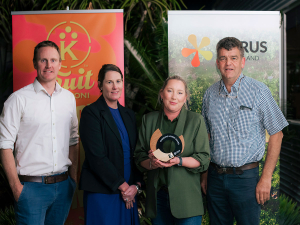
New Zealand's citrus growers were challenged to build their future on the value embedded in their fruit rather than the volume they produce, at Citrus New Zealand's annual gathering in Gisborne on 17 September.
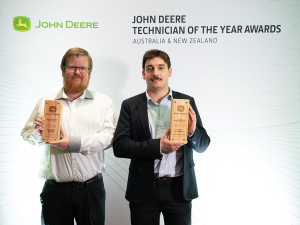
Leading John Deere technicians and apprentices from New Zealand and Australians were recognised at the recent sixth annual JD Technician of the Year Awards, held in Brisbane.
In Dacre, near Invercargill in New Zealand’s South Island, Bruce Dinnington is running a dairy operation unlike any other.
A free online platform aggregating governance vacancies across rural and regional New Zealand has been launched.
Environment Minister Nicola Grigg has announced details of a new rural plastics recycling scheme.
Agricultural drone operators say that a government decision to allow lower-risk drone work without certification won’t lower standards but drive innovation and efficiency.