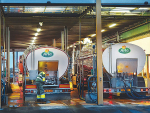
Europe’s largest dairy co-operative to launch in 2026 as Arla Foods and DMK merge
The creation of Europe's largest dairy co-operative should be complete by early 2026.
 increase font size
 Arla aims to double its sales via its customers’ online platforms to over 1 billion dollars across Europe.
European cooperative Arla is fast tracking plans to become the trading bloc’s dairy market leader for e-commerce as more consumers shop online in a Covid-riddled world.
One of the world’s top 10 dairy processors, Arla aims to double its sales via its customers’ online platforms to over 1 billion dollars (NZ$) across Europe.
Having witnessed a rapid growth in its e-commerce sales during the pandemic, with growth doubling in many key markets during 2020, Arla is now harnessing this development, as locked-down consumers continue to seek out household brands such as Arla and Lurpak during their online shopping.
The farmer-owned cooperative is supercharging its existing e-commerce plans 3-5 years ahead of schedule, increasing investments in its online presence, extending the number of expert e-commerce employees across the sales and marketing organisation in the UK, Denmark, Sweden, Germany, the Netherlands and Finland and aims to double the retail sales ambition.
“We have a clear goal of becoming dairy market leader for e-commerce in Europe and continuing to be a preferred partner for our customers,” says executive vice president and chief commercial officer for Arla Europe, Peter Giørtz Carlsen.
“E-commerce was on the rise in Europe before the Covid-19 crisis and we had been preparing on the technological side and with our customers for some time.
“The pandemic has rapidly changed behaviours towards online channels and this shift represents an opportunity for us to push our e-commerce ambitions forward in the innovation pipeline and the work is well under way,” says Carlsen.
Arla’s ability to fast track its e-commerce plans is partly due to the success of the transformation and cost-savings programme Calcium, as this has ensured that the cooperative is able to shift gears in a very agile way and reinvest in the business to boost online sales across Europe. The expanded new e-commerce acceleration team will focus on data analysis, driving online campaigns and visual content to make it easy for the online shopper to find Arla’s household products.
It says as the second wave of the Covid-19 pandemic is again limiting movement across the globe, grocery shopping online, including fresh food items such as dairy, is becoming a longer-term change in consumer behaviours.
With the new e-commerce strategy Arla has set an ambitious goal to have 10% of all retail sales across core European markets come from e-commerce.
The creation of Europe's largest dairy co-operative should be complete by early 2026.
Global Dairy Trade (GDT) and Arla Foods have announced that Arla will begin offering European-sourced skim milk powder (SMP) on GDT Pulse from May 2025 as part of an extension to the GDT Pulse pilot.
European dairy co-operative Arla Foods is forecasting a total revenue of nearly $25 billion this year.
Danish co-op Arla is now paying a monthly incentive to its farmer shareholders for sustainability efforts.
European dairy co-operative Arla Foods is eyeing a fibre-based cap for its milk cartons.


Federated Farmers has welcomed new rural policies released by ACT, saying they align closely with its own election priorities.

Rural Contractors NZ says proposed changes to land transport rules for agricultural vehicles are a welcome response by the Government to out of date regulations which have seen members hit with huge fines.
Alliance is calling for final applications for its 2027 Graduate Programme, with applications closing on Sunday 25 October.
Decades piloting planes has ensured vet and farmer David Hayes is focused on safety. So, after a serious accident while welding on farm, he is sharing his experience so others can learn from it.
Canterbury milk processor, Synlait Milk has confirmed Leon Fung as its chief executive officer.
OPINION: Making it easier to collect rainwater and use it to grow crops and livestock is a no brainer.