fbpx
Print this page
Friday, 11 August 2023 09:55

Selecting super beef sires for dairy

Written by  Paul Charteris
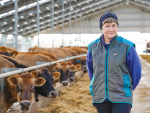
Paul Charteris, LIC’s beef genetics product lead. Paul Charteris, LIC’s beef genetics product lead.

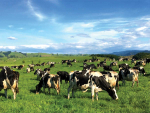
When it comes to selecting beef sires for dairy, our breeding team identify sires whose trait information indicates they are genetically superior in calving ease, have a moderate gestation length, and have lower-than-average birth weights.

These selection decisions are largely based on Estimated Breeding Values (EBVs) for these traits – with most emphasis placed on calving ease and birth weight.

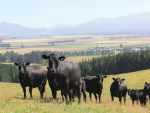
In general, we select sires that will not increase gestation length above that of the average New Zealand dairy cow (282 days). Both the Hereford and the Angus SGL offerings in our beef catalogue consist of sires that sit comfortably in the top 1% of their breed for gestation length.

Once the bulls enter widespread use, our genetics product and sire selection teams review MINDA data to monitor trends in calving ease and gestation length for sires.

In the Beef+Lamb NZ Dairy Beef Progeny Test, there is a wealth of data on how the progeny of individual beef sires perform when mated over dairy crossbred cows.

More than one-third of calves entering the beef industry each year were born on dairy farms. For the rearer and finisher, beef crossed over dairy cattle need to grow well, finish before their second winter, and yield.

Other than traits of dairy importance, sires with superior EBVs for weaning and yearling weight, carcass weight, eye muscle area (an indicator of yield), and intramuscular fat (or marbling) are our main selection criteria. Sires from Rissington Cattle Company have feed efficiency data, so we are able to select individuals that are genetically superior for this trait.

The ability of sires to colour-mark beef crossed over dairy calves is also considered by our breeding team.

While the genetics behind coat colour of beef crossed over dairy animals is notoriously complicated, the Speckle Park, Belgian Blue, and Murray Grey sires were selected with coat colour in mind (in addition to their performance).

When looking at animal welfare and health, we put additional selection pressure on Polled sires within the beef offering.

Less than a handful of beef sires in this year’s LIC Genetics Catalogue are heterozygous polled (i.e. the sires have one copy of the horned gene). In future, we will target a 100% homozygous polled for our genetics catalogue.

Paul Charteris is LIC’s beef genetics product lead

More like this

Three Pillars of BVD Control

Solid biosecurity practices, regular monitoring and timely vaccination are the three key pillars of effective Bovine Viral Diarrhoea (BVD) control on New Zealand farms. Zoetis veterinary technical advisor, Karley DeFrees, explains BVD is a costly but preventative disease that impacts a significant number of dairy farms in New Zealand. Implementation of a BVD control plan can help protect your herd from this avoidable disease.

Clostridial Disease in Lambs: NZ Vaccination Guide

Although preventable, lamb loss from clostridial diseases during the first year of life on New Zealand hill country farms continues to be an issue. A field trial, where lambs were vaccinated at docking and weaning, demonstrated that vaccination was highly effective, lowering clostridial deaths by 23%. Zoetis veterinarian Dr Victoria Chapman unpacks the importance of robust animal health programmes, vaccination timing and the potential harmful consequences for stock when vaccination isn't given.

BVD Control in Dairy Herds: How to Find & Remove PI Animals

Bovine Viral Diarrhoea (BVD) is estimated to cost New Zealand's dairy and beef industries more than $150 million every year, yet many of the tools needed to control it are already well understood. After more than 25 years in veterinary practice, Andrew Weir, animal health technical specialist at LIC, has seen firsthand the impact BVD can have on herd performance. We asked him about the role of persistently infected (PI) animals and the practical steps farmers can take to reduce their risk.

Transition Period: The Make-or-Break Window for Dairy Cows

The transition period is the make-or-break window for your entire season. If this period is poorly managed, you don't just see a few downer cows, you see a downward spiral that affects the cow's health, production and reproduction long into the season.

Featured

NZ Tractor Sales Up 10.7% in First Half of 2026: TAMA

As we move into the second half of 2026, the Tractor and Machinery Association (TAMA) reports that Year-to-Date figures ending June 30 saw new tractor deliveries hitting 1,386 units or 10.7% ahead of the same period in 2025.

National

Machinery & Products