fbpx
Print this page
Friday, 25 July 2025 08:55

How to make raw milk reliable for calves

Written by  Staff Reporters
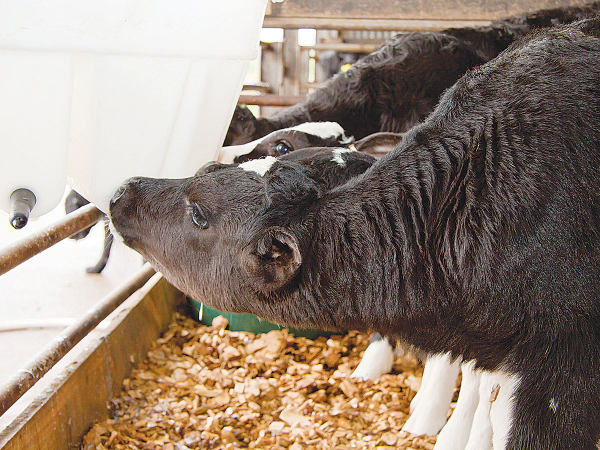
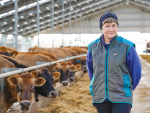
Feeding calves infected milk is high risk for spreading diseases such as M. bovis. Feeding calves infected milk is high risk for spreading diseases such as M. bovis.

Feeding infected milk is high risk for spreading diseases such as M. bovis.

Milk that has the lowest risk of containing M. bovis bacteria comes in these forms: calf milk replacer powder, acidified milk, or pasteurised milk.

If you're feeding whole milk, consider the following:

  • Discard milk from cows under treatment for mastitis or other illnesses.
  • Aim for a pH level of 4.5 to reduce the risk of M. bovis. At a pH level of 4, the milk is unpalatable, and the calves will refuse to drink it.
  • Pasteurisation will kill M. bovis if the machine is working correctly and the proper procedures are followed.
  • Adding yoghurt to milk is a less reliable way to reduce the pH, as this process takes more time and is temperature, dependent to get the culture growing.
  • If the pH doesn't drop below 5 for at least 8 hours, M. bovis will not be killed.
  • The addition of potassium sorbate preservative does not kill M. bovis.

Advice for acidifying milk

Do not acidify below pH 4 as this will result in thickened milk and risks complete coagulation. Calves will not drink milk with a pH of 4 or below.

Milk must be less than 24°C to minimise coagulation or clot formation.

Always add acid to milk, not milk to acid.

When using citric acid, the rate is 5.5g citric acid per litre of whole milk, or 550g per litres of whole milk, or 5.5kg per 1000L of whole milk. The acid needs to be sprinkled on top of the milk while it is being agitated.

Milk at pH 5 and below separates, but with gentle mixing goes back into a homogenous solution. Gentle mixing of the milk twice a week is the recommended method. Continuous or vigorous mixing causes coagulation.

Use pH strips or an electronic pH meter. Note meters must be kept clean and calibrated when working with milk.

Systems that pipe milk may have coagulation in the pipes/tubes causing blockage of lines and nipples. This may result in the feeding of "whey" to calves.

Article - DairyNZ

More like this

Three Pillars of BVD Control

Solid biosecurity practices, regular monitoring and timely vaccination are the three key pillars of effective Bovine Viral Diarrhoea (BVD) control on New Zealand farms. Zoetis veterinary technical advisor, Karley DeFrees, explains BVD is a costly but preventative disease that impacts a significant number of dairy farms in New Zealand. Implementation of a BVD control plan can help protect your herd from this avoidable disease.

Clostridial Disease in Lambs: NZ Vaccination Guide

Although preventable, lamb loss from clostridial diseases during the first year of life on New Zealand hill country farms continues to be an issue. A field trial, where lambs were vaccinated at docking and weaning, demonstrated that vaccination was highly effective, lowering clostridial deaths by 23%. Zoetis veterinarian Dr Victoria Chapman unpacks the importance of robust animal health programmes, vaccination timing and the potential harmful consequences for stock when vaccination isn't given.

BVD Control in Dairy Herds: How to Find & Remove PI Animals

Bovine Viral Diarrhoea (BVD) is estimated to cost New Zealand's dairy and beef industries more than $150 million every year, yet many of the tools needed to control it are already well understood. After more than 25 years in veterinary practice, Andrew Weir, animal health technical specialist at LIC, has seen firsthand the impact BVD can have on herd performance. We asked him about the role of persistently infected (PI) animals and the practical steps farmers can take to reduce their risk.

Transition Period: The Make-or-Break Window for Dairy Cows

The transition period is the make-or-break window for your entire season. If this period is poorly managed, you don't just see a few downer cows, you see a downward spiral that affects the cow's health, production and reproduction long into the season.

Featured

NZ Tractor Sales Up 10.7% in First Half of 2026: TAMA

As we move into the second half of 2026, the Tractor and Machinery Association (TAMA) reports that Year-to-Date figures ending June 30 saw new tractor deliveries hitting 1,386 units or 10.7% ahead of the same period in 2025.

National

Machinery & Products