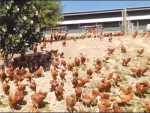
Supermarkets make egg production clucking difficult
The supply of eggs in NZ is likely to be tight in the coming year.
 increase font size
 NZFMA executive director Michael Brooks.
New Zealand feed producers are being encouraged to boost staff training to maintain efficiency and product quality.
Last year the New Zealand Feed Manufacturers Association (NZFMA) created and launched a new series of training workshops to deliver industry-developed qualifications.
A key element of the workshops was that they were held on actual production sites to allow training in real life situations. The goal was to uphold the FeedSafeNZ standards used in accredited sites for producing high-quality feed for the animals New Zealanders consume and export.
Last year, over a million tonnes of animal stock feed was produced in New Zealand.
NZFMA executive director Michael Brooks says the workshops are just one of the ways the NZFMA helps ensure the feed production sector is as efficient as possible while ensuring quality is maintained.
“The international grain market has been volatile with global events and rising costs. It’s been a tough few years for the industry, having to navigate uncertainty and adapting quickly to change, but I’m proud to say the industry is in good heart and the uptake of this training across the industry is a healthy sign of that.
“A strong programme like this benefits the whole agricultural sector and all those who purchase quality local feed for their animals.”
Brooks says 2025 spots are filling up already, but a few spaces are available.
“I’d encourage anyone in the feed manufacturing business to sign up, no matter the level of experience or size of the feed mill. This course is designed by the industry for the industry and is an invaluable part of good business practice.”
With over 20 years’ experience, industry expert and NZFMA facilitator Trevor Scoones helped lead the development of the course and has seen continued interest from the feed manufacturers he trains.
Scoones says the NZFMA Training Workshop has been a success, with strong sign-ups to the two-day workshop.
“In its first year, all workshops filled up quickly and this year it’s about 90% full already. The response has been overwhelmingly positive. We have people from all levels join our workshops, from entry-level operators to management and engineers,” he says.
Over two days, participants get hands-on practical training, visiting farm mills, as well as theory sessions, where the group get to share knowledge with one another and form networks.
The workshop is split into three modules, where they learn about processing raw materials, pellet production, nutrition, quality management, food safety, health and safety and the industry’s quality assurance scheme FeedSafeNZ.
Having assisted in the development of the workshop, SealesWinslow national operations manager Tyler Stuthridge is a strong supporter and has already sent several of his staff to attend.
“These workshops are of great value to our business and customers. It helps us stay on top of our game, keeping up with good health and safety practices and achieving the best possible efficiency.
“For customers that know to look for feed that carries the FeedSafeNZ accreditation mark it’s also reassurance that we are involved in training to maintain that,” Stuthridge says.
All members of the NZFMA are FeedSafeNZ accredited. They must undergo regular audits and staff training to uphold these high standards and maintain their accreditation.
The NZFMA hosts training workshops in both the North and South Island to be accessible to all members.
The supply of eggs in NZ is likely to be tight in the coming year.
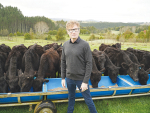
Comedian Te Radar is throwing his weight behind a campaign promoting safe animal feed.
New Zealand feed manufacturers are lifting their game when it comes to quality and safety of their products.
The new welfare code is likely to bring consolidation in the egg industry, according to the Poultry Industry Association of NZ.


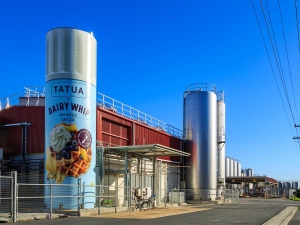
Waikato milk processor Tatua has again declared a record milk payout to farmer shareholders, leaving other processors in the dust.
A Labour-led Government won’t be bringing back the controversial freshwater rules of 2020.
National’s much-touted free trade deal with India featured in the Rural Issues Debate at Mystery Creek, Hamilton on Wednesday night.
New Zealand's 2026-27 freshwater fishing season has opened, with anglers encouraged to head to rivers and lakes over the coming days as conditions look favourable across much of the country.
Central Otago District Council (CODC) has voted against a plan to spread treated sewage sludge from Cromwell and Alexandra on farmland near Lauder, a decision Federated Farmers says reflects strong opposition from rural residents.
Pāmu has released its FY26 Integrated Annual Report, reporting a Net Operating Profit of $113 million, more than double the $49 million recorded in FY25.