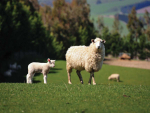
Early Weaning Lambs: What the Massey Trials Found
Farmers with high-quality feed available in late spring could consider weaning at least a proportion of their lamb crop early to benefit both lambs and ewes.



 increase font size
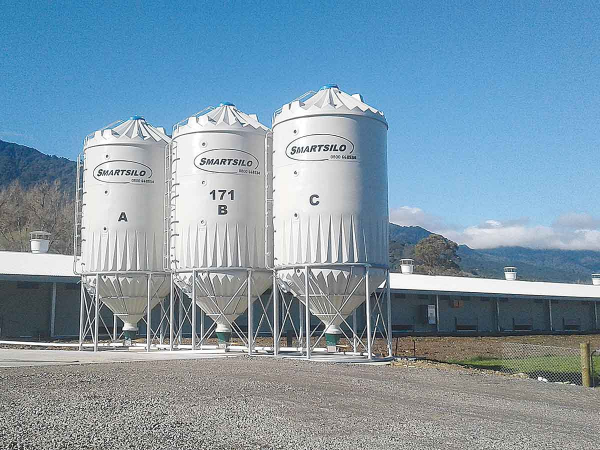 Smart Silos.
Made from rotationally moulded polyethylene, the Smart Silo range offers capacities from 280 litres to 30 tonnes.
They offer a longer lasting and more hygienic storage solution for all types of contents and operations.
New Zealand made and available direct from the manufacturer, Advantage Plastics, Smart Silos have been providing all types of farmers throughout the country with storage solutions for the likes of grains and feeds for two decades.
The one-piece product design means there is no assembly required on-site. More importantly, it eliminates the risk of moisture ingress and the spoiling of the contents.
Manufactured from medium density, food grade, UV-stable rated polyethylene, the silos are tough, durable and rust-free, so will retain their value and condition.
As part of the customisation package offered by Smart Silo, all framework and plastic moulding is carried out in-house, so the company is able to meet special requirements such as bespoke framing to accommodate machinery or systems, and colour matching to complement existing buildings or landscapes. They can also help with obtaining resource consents.
Farmers with high-quality feed available in late spring could consider weaning at least a proportion of their lamb crop early to benefit both lambs and ewes.
If growing more feed at home adds up to $428 profit per tonne of dry matter to your bottom line, wouldn’t it be good to have a ryegrass that gets you there quicker?
When buying supplementary feeds, farmers need to consider the entire package on offer – service, freight and all the components in a feed mix – not just focus on the price of the cheapest component – palm kernel meal, according to J. Swap Stockfoods sales manager Joe Hardman.
Two high producing Canterbury dairy farmers are moving to blended stockfeed supplements fed in-shed for a number of reasons, not the least of which is to boost protein levels, which they can’t achieve through pasture under the region’s nitrogen limit of 190kg/ha.
OPINION: Few things are more stressful for dairy farmers than running out of feed when cows need it most.


Dairy processors are ready to further boost New Zealand’s export earnings but want the incoming government to match their ambition with good policy.

Massey University is best placed to solve the “problems” facing the dairy industry, says vice chancellor, Pierre Venter.
Synlait's longest serving employee – a man who joined the Canterbury-based milk processor even before it began processing milk – is now its newest executive.
A dairy industry leader believes eradicating the common and costly disease, Bovine Viral Diarrhoea (BVD) is within reach.
A farmgate milk price of $10/kgMS this season is firming up as milk powder prices soar and the New Zealand dollar weakens.
Federated Farmers has welcomed new rural policies released by ACT, saying they align closely with its own election priorities.




