International Day of Rural Women: Two DairyNZ Farmers’ Stories
Today, 15 October, is the International Day of Rural Women, which recognises rural women’s contribution to farming, communities and the environment.
 increase font size
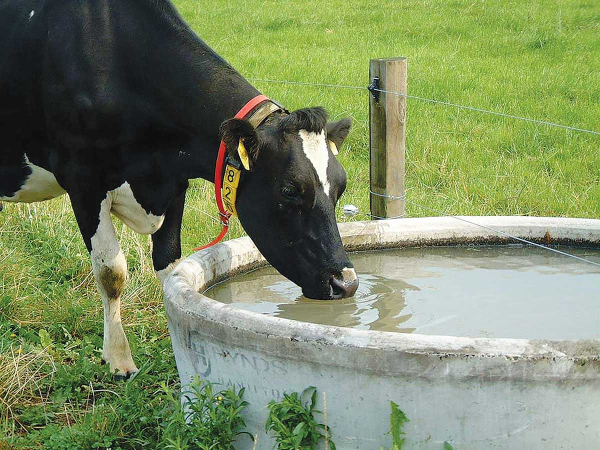 There are clearly more things to investigate than nitrate in drinking water, caused by dairying.
OPINION: In the 1980s, concern was expressed in West Germany about the falling birth rate. Some simple analysis was performed by Professor Helmut Sies, physician and biochemist at Dusseldorf University. His letter ‘A new parameter for sex education’ was published in Nature in 1988:
SIR – There is concern in West Germany over the falling birth rate. The accompanying graph might suggest a solution that every child knows makes sense.
HELMUT SIES – Institut fur Physiologische Chemie 1, Universitiit Dusseldorf, Moorenstrasse 5, D-4000 Dusseldorf, FRG
Professor Sies' medical and biochemical training enabled him to show the relationship between the falling human birth rate and the decline in breeding storks… approximately 94% of the birth rate is directly associated.
Does This Indicate That Storks Really Do Bring Babies?
Or is it as much of an indication that correlation is not causation as the relationship between nitrate in drinking water and preterm babies?
Media coverage has focused on the recent paper from researchers from several New Zealand universities resulting from a collaboration in a national cohort study on preterm births (PTB) and nitrate in drinking water. The researchers concluded that higher nitrate concentrations in drinking water were associated with increased odds of PTB. Under a causal assumption, their analysis suggested approximately 120 or 4% PTB per year were attributable to nitrate exposure.
Examination of various reports does not support the suggestion.
The Champion Centre based in Christchurch concluded that South Island’s West Coast, the North Island’s MidCentral district and the Tairawhiti coast were most likely to have PTB.
The Ministry of Health New Zealand data indicate that percentage of PTB is highest in MidCentral (9.2%), Hutt Valley (8.8%), Canterbury (8.2%) and West Coast (8.1%). The Earth Sciences NitrateWatch Citizen Science project has a map showing nitrate. Greenpeace and one of the authors of the new paper were involved in sample collection. The red spots (indicating high nitrate) are certainly in Canterbury – but they are also in Southland and the Waikato… and do not appear in Tairawhiti or Upper Hutt.
The overall figure for PTB in New Zealand is 7.9%, but ethnicity has an effect. For Māori it’s 9%, Pacific Island it is 8.1% and for Pākehā it is 7.1%. There are clearly more things to investigate than nitrate in drinking water
The stork and baby data come from a paper published in the Journal of Humanistic Mathematics in 2023, with the title Where do Babies Come From. It warned that “correlation simply means that there is a relationship between two factors that tells nothing about the direction of the relationship, if any. Another possibility is simple coincidence”.
Or perhaps researchers should look more deeply for causes before the alarm is raised.
So, these words are for you – the rural reader wondering if your attempt at making a living by producing the food that fortifies peoples’ bodies has really caused all the problems of the world, including degrading the waterways and making people sick.
It hasn't.
There are more people being fed to a better state of nutrition than ever before. Humans are living longer, healthier lives. They are able to have greater work-life balance than in earlier times.
Your work in increasing productivity from the land has enabled society’s well-being.
Because of you and the efforts you make in increasing productivity from your assets, lifestyles have improved. StatsNZ has the data.
The productivity gains in agriculture have outstripped most other sectors in the economic cycles since 1978 when records began.
Multifactor productivity, which takes into account labour, has been exceeded only by Information Media and Telecommunications (IMT) in the time period since 1978 (agriculture 2.5, IMT 2.7) with most sectors barely reaching 1.
On the foundation of the export economy, New Zealanders report a life satisfaction of 7.6 where the OECD average is 7.28.
Further, New Zealand tops the index (created by Remote – a global employment assistance company) in having the best work-life balance of 60 countries because of a “high minimum wage and generous leave”.
New Zealand is a pretty good place to live.
But listen to the media reports and one might be persuaded that many things are going to wrack and ruin.
The sad fact is that agriculture is often the first thing blamed.
A paper in 2023 in the Journal of Humanistic Mathematics re-examined Where Do Babies Come From and concluded that “Statisticians and mathematicians know that correlation does not imply causation. Still, many conspiracy theories, misconceptions and fake news are based on fallacious arguments that involve spurious correlations”.
Almost 99% of the divorce rate in Maine is directly associated with the consumption of margarine.
Should you be watching out for butter replacement on the dining table? Or simply keeping a wary eye remembering Mark Twain’s words: There are three kinds of lies: lies, damned lies, and statistics.
Dr Jacqueline Rowarth, Adjunct Professor Lincoln University, is a farmer-elected director of DairyNZ and Ravensdown. She is also a member of the Scientific Council of the World Farmers’ Organisation. This email address is being protected from spambots. You need JavaScript enabled to view it.
Today, 15 October, is the International Day of Rural Women, which recognises rural women’s contribution to farming, communities and the environment.
OPINION: New British Prime Minister Andy Burnham has said that farming and food production is a matter of ‘core national resilience’ and must be spoken about in Whitehall at the same level as issues with ‘defence, energy, water and steel’.
Sam Whitelock is an All Black rugby great, Farmstrong Ambassador and working dairy farmer in the Manawatu. Having stepped away from professional sport and returned to his roots on the family farm, he talks about balancing farm life with advocating for rural wellbeing.
The Minister for Rural Communities, Mark Patterson, says there's a massive infrastructure deficit in rural areas.
The Royal New Zealand College of General Practitioners (the College) and Hauora Taiwhenua Rural Health Network are calling for investment in a proposed new training pathway for rural GPs, warning that many rural practices are struggling to recruit while a large share of the existing workforce nears retirement.

Beef + Lamb New Zealand says the National Party’s agriculture plan provides a strong basis for lifting productivity, supporting rural communities and recognising the sheep and beef sector’s environmental track record.

Wools of New Zealand chief executive John McWhirter says its new direct-to-consumer wool carpet service, Laneve, is the next step in the development of the business.
The New Zealand-India Free Trade Agreement entered into force today, improving market access for New Zealand businesses across a wide range of sectors.
Vetekina Pau'u is the first Tongan to win the William Gearish Memorial prize and sadly she will also be the last recipient.
Things are looking up in the dairy goat sector.
As the India-New Zealand free trade agreement enters into force, New Zealand’s apple industry has reaffirmed its commitment to the long-term development of India’s apple sector.