Food insecurity
OPINION: Good on the UK'S NFU for battling to get supermarkets to prioritise local farmers' produce.
 increase font size
 The one guarantee is more uncertainty for NZ.
OPINION: Those of us who have been around for quite a few years will remember the unhappy and heady days when Britain joined the then EEC on the January 1, 1973.
Up until then, NZ had enjoyed unlimited access to Britain for its agricultural products and at one stage there was even a law passed that said they had to be given priority for our exports.
When Britain joined the EEC, many NZer’s felt hurt and disappointed that the so called ‘mother country’ had deserted us and that we now had to find new markets for our agricultural exports.
There were some tumultuous times – especially in the late 1970’s and early 1980’s when the EEC as it was then, and Britain by default, further cut the amount of product we could send there.
Despite these setbacks NZ Inc got on with the job and found new markets and settled upon a reasonable deal with the European Union.
In 1972 we were concerned about the impact that Britain would have on joining the EU and 46 years on we are ironically concerned on the impact of Britain leaving the EU.
The reason for Britain leaving the EU is bewildering to many. One commentator described it as ‘an unbelievable act of self-harm’, and time will tell whether this is so.
From NZ’s point of view Brexit is not good news and whatever spin the UK government may put on it, their leaving the EU has made life for us as an exporter of agricultural products much more difficult.
For a start, unravelling the access arrangements between the two entities is a nightmare and already the signs for us are bad with the EU and the UK seeming to flout WTO rules in terms of splitting the sheep meat quota arrangements. Issues on dairy are also a major problem.
This whole process has cost NZ massively in terms of time and resources sorting out what to do, and the cash register is still ringing up the bill.
To their credit the UK have indicated that they are willing to negotiate a favourable FTA with us and let’s see what this means over time. But with Britain leaving the EU, New Zealand is left without a so called ‘friend’ around any negotiating table in Europe.
The one guarantee is more uncertainty for NZ as the protracted trade negotiations continue – just like it was 46 years ago.
OPINION: Good on the UK'S NFU for battling to get supermarkets to prioritise local farmers' produce.
OPINION: Seven of the UK's major supermarket chains have now responded to the call for them to back the nation's farmers by adding 'buy British' tabs to their websites.
Damien O'Connor is planning to head back to Europe again shortly to breathe oxygen into the free trade agreements that New Zealand is negotiating separately with the UK and the EU.
British and New Zealand trade negotiators are burning the midnight oil in a bid to get a free trade agreement between the two countries.
A hint from recent trade talks suggests that New Zealand may not get everything it wants in its free trade negotiations with the European Union and Britain.


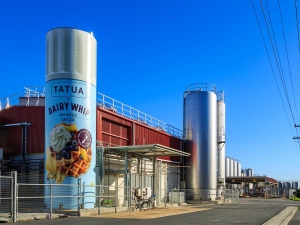
Waikato milk processor Tatua has again declared a record milk payout to farmer shareholders, leaving other processors in the dust.
A Labour-led Government won’t be bringing back the controversial freshwater rules of 2020.
National’s much-touted free trade deal with India featured in the Rural Issues Debate at Mystery Creek, Hamilton on Wednesday night.
New Zealand's 2026-27 freshwater fishing season has opened, with anglers encouraged to head to rivers and lakes over the coming days as conditions look favourable across much of the country.
Central Otago District Council (CODC) has voted against a plan to spread treated sewage sludge from Cromwell and Alexandra on farmland near Lauder, a decision Federated Farmers says reflects strong opposition from rural residents.
Pāmu has released its FY26 Integrated Annual Report, reporting a Net Operating Profit of $113 million, more than double the $49 million recorded in FY25.