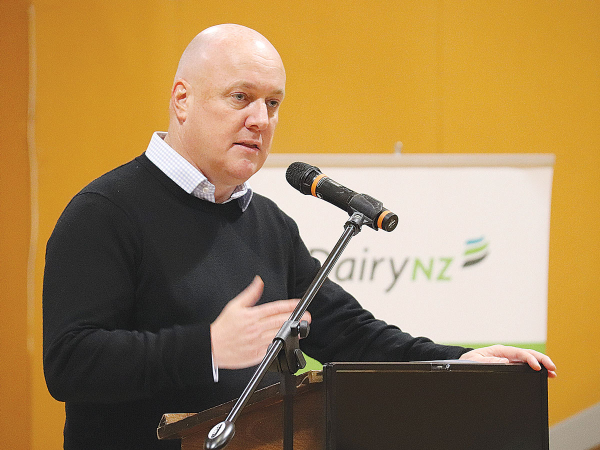
OPINION: Without doubt, a priority of the Government this year will be to gain traction on the elusive free trade deal with India.
After all, Prime Minister Christopher Luxon has promised an FTA with India in this term. It seems the push for an FTA is not only coming from Wellington. New Delhi, for its part, has written to major Indian businesses seeking their views on negotiating an FTA with NZ.
NZ's two-way trade with India was valued at $2.93 billion in the year to June. To put that in perspective, India ranks 12th in terms of trading partners. New Zealand's two-way trade with China, NZ's largest trading partner, was valued at $37.84b.
Current exports to India consist mainly of wood products, wool, and fruit. Dairy products - New Zealand's biggest export earner - barely feature due to India's protective tariffs.
During its first year, the Government was determined to make a difference. Luxon has spoken twice with his Indian counterpart Narendra Modi and has secured an invite to visit New Delhi this year. Trade Minister Todd McClay has met his Indian counterpart six times - the latest meeting taking place in India last month.
However, securing a deal with India will be tricky. Agricultural access, particularly for dairy products, remains the biggest challenge. India's dairy sector employs millions of small farmers and carries enormous political significance. The livelihoods of more than 150 million people depend on India's dairy industry. Any changes will always be highly political.
There's a school of thought that NZ should follow Australia's lead. The Australia-India Economic Cooperation and Trade Agreement, signed in 2022, delivered significant market access while respecting Indian sensitivities. Australian exporters now enjoy tariff-free access for products like sheep meat and many horticultural goods.
Last month a NZ hort sector delegation visited India to engage with government officials.
India has long safeguarded its farmers against the perceived threat of dairy imports with previous governments treating market access for dairy and other key agricultural exports as a 'red line' of sorts for negotiations.
But there have been hints that the current government may be willing to take a more pragmatic approach for the benefit of other sectors.
The potential of a market with nearly 1.5 billion people opening up for our products is just what NZ's hort and red meat sectors need.