China No Longer Just A Commodity Story - Luxon
China remains New Zealand’s biggest market, taking $23 billion of our exports, but it’s no longer a commodity story, says Prime Minister Christopher Luxon.
 increase font size
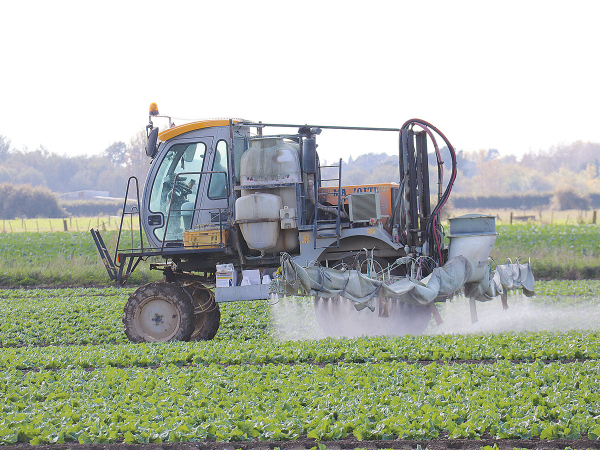 Chinese targets to reduce carbon emissions is expected to have wide-ranging impacts on the price and supply of glyphosate.
OPINION: The global market will be caught in the crossfire of China's measures to reduce its environmental footprint, with ambitious goals to be carbon neutral by 2060.
Although noble in cause, the spin-off will be further price hikes for goods on top of an already strained supply chain.
With pressure to meet environmental targets, China had to redefine its reliance on coal. In 2020, approximately 57% of China's total energy consumption came from this most carbon-intensive fossil fuel, according to a report commissioned by CropLife Asia. According to reported data, the country commissioned over three times the 11.9GW of new coal-derived energy capacity commissioned in the rest of the world.
In September 2020, China announced plans to peak its carbon emissions by 2030 and become carbon neutral before 2060.
Under the policy, central government sets regional targets for reducing energy consumption, defined by each region's efficiency and degree of consumption.
Any company sourcing from China could be affected by a resulting lack of energy availability. Limitations on production will be supply chain wide, from mining operations to pesticide formulators.
A limit on the number of days that many Chinese chemical companies and their raw materials suppliers can manufacture is expected. This will have wide-ranging impacts on the supply and price of goods from its manufacturing plants, and a profound impact on the glyphosate manufacturing locations of Jiangsu, Guangdong, Zhejiang, Anhui and Sichuan - in particular.
Companies manufacturing in the East and South of China are expected to face the worst impacts of power shortages.
With temporary suspensions of operation, Chinese agrichemical companies are facing shortages of raw materials and electricity supply at the same time. The ongoing lack of power availability will likely increase active ingredient prices and other farm inputs.
Higher costs combined with a lack of supply may lead to fewer pest control options being used, causing dire circumstance for pest and disease management.
A lack of supplies could see growers lowering application rates to increase the potential treatable areas from every bottle of product. Not using a product according to its label rates can trigger resistance isues - where certain weeds develop resistance to products - leading to more severe weed and productivity issues.
Growers may forgo certain applications in favour of non-chemical methods of pest control (e.g. ploughing in the place of pre-plant herbicides). Ironically, this will increase agricultural emissions, as ploughing releases carbon into the atmosphere and uses more fuel to power the farm machinery.
The most favourable solution is to use pest control products, according to label instructions, only when when necessary. Farmers and growers can adopt Integrated Pest Management plans such as crop rotation, use of locally adapted or pest-resistant/tolerant varieties and manipulating planting/harvest dates to avoid pests.
How to avoid supply issues
Talking to merchant reps about options to solve pest problems is recommended in case a preferred brand is temporarily in short supply. Reps have a broad knowledge of the suite of alternatives and can recommend products to tackle pests and diseases. Growers should consider the substitute's product's fit with the crop programme and ensure that an alternative products meet processor, exporte or importing country requirements. Planning orders with reps for necessary supplies well ahead of time is also recommended to allow for the delay in supply.
Note: Agcarm would like to acknowledge CropLife Asia for contributing to this article.
Mark Ross is chief executive of Agcarm.
China remains New Zealand’s biggest market, taking $23 billion of our exports, but it’s no longer a commodity story, says Prime Minister Christopher Luxon.
Fonterra is strengthening its foodservice presence in China with the launch of a new cream for professional bakeries at Bakery China 2026 in Shanghai.
OPINION: What does the birth rate in China have to do with stock trading? Just ask a2 Milk Company.
Additional tariffs introduced by the Chinese Government last month on beef imports should favour New Zealand farmers and exporters.
One of the most galling aspects of the tariffs whacked on our farm exports to the US is the fact that, now more than ever, US farmers are being propped up by government welfare – a direct result of Trump’s hardline on its trading partners.



A major move is about to get underway to improve the quality and viability of dairy beef and cattle in NZ.
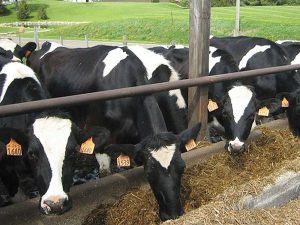
Veterinarians say changes to the code of welfare for dairy cattle provides a positive foundation for improved cattle welfare across the country.
Today, 15 October, is the International Day of Rural Women, which recognises rural women’s contribution to farming, communities and the environment.
Global dairy giant Lactalis has integrated its Australian operations with the Mainland Dairy consumer business it acquired from Fonterra earlier this year.
After almost two decades of sharemilking, saving and building equity, Aaron and Marcia Flay this year realised their long-held dream of settling on their first dairy farm.
Good medium to long term prospects for NZ beef, especially in the US, has heighted the focus on various initiatives to capitalise on this situation.