Ups and downs in income are a tough issue for businesses in the primary sector.
Dairy industry highs and lows are a prime example of a problem with many causes; for primary industry exporters the main influence is offshore market conditions beyond the control of farmers and growers.
But for growers the whopper is biosecurity, the risk that looms large every week as new threats to our $5 billion business are found.
High profile horticultural biosecurity incursions threaten kiwifruit – look at the Psa disaster. Also threatened are tomatoes, capsicum, potatoes and tamarillos with the tomato potato psyllid, and of course fruit and Tau flies.
Growers face many more threats but they are left do the best they can.
When a biosecurity incursion strikes – such as finding a fruit fly in Auckland – there are two options. The best is eradication. It may cost a lot but it returns the industry to where it was before the incursion. Eradication is not often practicable. Managing the pest is the usual practice and that falls to the growers.
Every biosecurity challenge imposes enormous cost on growers and taxpayers. For example, during the Queensland fruit fly responses the taxpayer footed enormous one-off costs. In Grey Lynn it cost at least $1 million to eradicate each fruit fly.
But for growers the cost continues for as long as the pest or pathogen remains in NZ. Psa is a good example of this: the average cost per canopy hectare to manage Psa is $3000. That's an extra cost growers must pay from profits.
Then there will be the sneaky biosecurity incursion found one day in a paddock or orchard. No one knows where it came from, but there it is – a major problem. Growers and farmers have to mobilise to deal with such an incursion. A good example of this is velvetleaf.
Spraying is the first reaction, but it is neither an environmentally or financially sustainable solution. Innovative, research based and sustainable solutions are required.
At the time of writing the horticulture industry is waiting to find out whether the Environmental Protection Authority will approve the use of a biological control – a tiny wasp called Tamarixia – to fight the tomato potato psyllid. We are hoping the EPA will allow the industry to use this natural pest control method.
The more we can do to reduce this risk, the stronger our growth can be.
Join the conversation with us about biosecurity, or any other issue, via our Twitter account: @HorticultureNZ or directly to me @MikeChapmanHort.
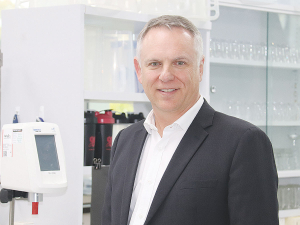
• Mike Chapman is chief executive of HortNZ.