Helping farmers tackle challenges
The opportunity to spend more time on farm while providing a dedicated service for shareholders attracted new environmental manager Ben Howden to work for Waimakariri Irrigation Limited (WIL).
 increase font size
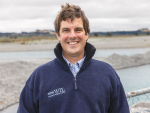
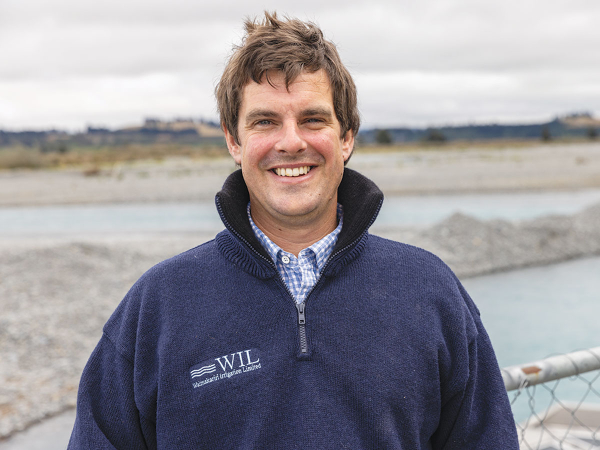 Ben Howden is the first full-time internal environmental manager to work for Waimakariri Irrigation Limited.
The opportunity to spend more time on farm while providing a dedicated service for shareholders attracted new environmental manager Ben Howden to work for Waimakariri Irrigation Limited (WIL).
Howden is the first full-time internal environmental manager to work for the cooperative and says this demonstrates the importance WIL places on assisting shareholders to meet their environmental requirements while also responding to current and future environmental challenges.
“Spending more time out on farm with shareholders while also considering what the future holds really appeals to me. I am keen to get to know our shareholders and find out how I can help them to achieve their environmental goals.”
Growing up on his family’s farm near Ashburton, Howden understands what it takes to operate a successful farm on a practical level. After high school, he attended Canterbury University where he gained a master’s degree in environmental science before starting his career as an environmental analyst with Rangitata Dairies in South Canterbury.
While working for Rangitata Dairies, he focused on providing on-farm and consent support for the company’s farming operations.
Howden then moved to Irricon where he spent five years working as an environmental consultant with a focus on consents and auditing during the time when Farm Environment Plans (FEPs) became a requirement for farmers.
“A year after I started at Irricon, Environment Canterbury launched their FEP (Farm Environment Plan) auditing programme,” he explains. “I provided practical advice to farmers and carried out audits. There was a lot to learn during this period for both consultants and farmers."
In 2021, Howden took up a principal consultant role with Ravensdown where he led a team of consultants based in mid- Canterbury to support farmers in meeting their regulatory requirements and environmental goals.
“I enjoyed leading a team and had the opportunity to work in a large organisation where I could gain a lot of experience and learn new skills,” he says.
“After a few years, I wanted to spend more time out on farm again and being able to work closely with farmers is what attracted me to the role with WIL.”
Howden sees challenges and opportunities ahead for WIL’s shareholders and is looking forward to helping them navigate options for a sustainable farming future.
“Obviously we have challenges in terms of regulation and climate change, but we also have plenty of opportunities including technology and efficiency gains,” he adds.
“The irrigation scheme also has an opportunity as a cooperative to secure a more sustainable and reliable water supply.”
Along with building strong relationships with WIL’s shareholders and familiarising himself with the irrigation scheme, he will be supporting the preparation of WIL’s discharge consent renewal during the first few months of his new role.
The opportunity to spend more time on farm while providing a dedicated service for shareholders attracted new environmental manager Ben Howden to work for Waimakariri Irrigation Limited (WIL).
A nursery initiative to empower Waimakariri Irrigation Limited (WIL) shareholders to grow their own native seedlings has proven successful.
Investing in precision agriculture has provided North Canterbury farmer Roscoe Taggart with benefits - environmental, social and financial.



Now in its fourth year, the 2026 Fencing Industry Awards, formed part of the proceedings of the FCANZ Conference, held in Nelson during August.
DairyNZ deputy chair Cameron Henderson has been re-appointed unopposed for another term.
OPINION: The stats speak for themselves.
Farms across the upper North Island are trialling different pasture mixes as part of a research programme that aims to build greater resilience into farming systems.
Election years are always a concerning time for farmers, according to DairyNZ chair Tracy Brown.
The Ballance Farm Environment Awards are coming to the West Coast of the South Island.