Monthly dog dosing will close measles gap
Requiring that all dogs on sheep farms be treated every four weeks for sheep measles is a significant step in reducing the impact of the parasite, says Dan Lynch.
 increase font size
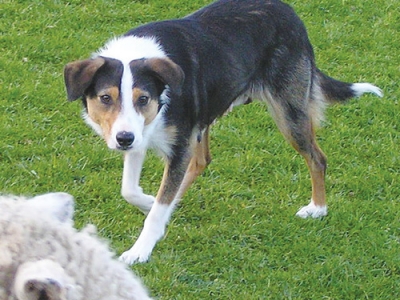 A dog will struggle to learn if the rules keep changing.
If someone is wondering whether to train or buy a trained dog, and asks for my advice, I would ask the following questions to help their decision.
"Do you want a dog that is a liability, okay, good or indispensible? Would you rather invest time or money? Do you know how to train a dog? If you don't, are you happy to seek guidance?"
If someone doesn't know what they are doing, how do they expect to teach a dog commands, and right from wrong when handling stock?
Dogs learn from opportunity, guidance, example, repetition, regularity and – last but by no means least – consistency. I'm always bleating about consistency, but in my mind it is the most important aspect of dog training.
A dog struggles to learn if the rules keep changing: what is there to remember? Inconsistency leads to confusion. And, if every time the dog is confused you yell at it, it won't be long before it is cowering, too afraid to try anything.
"Are you prepared to make a commitment to a young dog, enabling it to grow into a well-adjusted, nicely mannered animal? Because it won't if it is always in the kennel with little human contact and outside experiences."
"Can you control your temper, keep calm, be patient and dedicate the time and energy in order to train a dog?" The higher your expectations are, the more time and effort you will need to invest. It is a rare dog that can go to work with no training and instinctively know what to do and when, and be worth its weight in gold from day one.
If you decide the prospect of training a dog is an exciting one, along with the possibility of great satisfaction, endless rewards and undying loyalty, then I offer the following advice to get you on your way:
From day one teach the meaning of 'good dog' and 'no!' These three words can take your dog's learning experience from confusion to logic, literally halving the time you spend teaching something. It is vital to use them sparingly, correctly and at the right time; if you don't they will lose their magical powers.
In the early stages of training use three-six quiet sheep (not rams, cryptorchid's or ewes with lambs at foot), pre-work the sheep for a day or two with an older dog and remove any scatterbrain or confrontational troublemakers.
Never train your dog if you feel shattered after a big day or you are in a foul mood; you will do more harm than good. Your young dog does not deserve your short fuse or inappropriate chastisement; it is learning, it doesn't understand and it needs your patience more than anything else. The outcome will be greater if it is relaxing in the kennel until you are in a better frame of mind.
When you are working with a young dog, always, I repeat 'always', end on a good note.
If things are going wrong, rather than persevering and making matters worse, decide to call it quits, ask your dog to do something it understands and obeys (something simple like coming when called, lying down, etc) pat it, say 'good dog' and end for the day.
I have seen too many idiots angrily insisting a dog does something it doesn't understand, over and over again, expecting it to learn, until they get to the point where the dog is terrified and the trainer (for want of a better word – but they're not) loses their temper with the poor thing, often ruining it for life. If only they had stopped long before this point.
• Anna Holland is teaching people dog training.
For more information www.annaholland.co.nz or Ph 06-212 4848 or This email address is being protected from spambots. You need JavaScript enabled to view it.
Requiring that all dogs on sheep farms be treated every four weeks for sheep measles is a significant step in reducing the impact of the parasite, says Dan Lynch.
Requiring that all dogs on sheep farms be treated every four weeks for sheep measles is a significant step in reducing the impact of the parasite, says Dan Lynch.
A UK farmer has smashed a world record – for selling her sheepdog at an astonishing price.
Lambing is looming closer and if you have a young dog that isn’t showing much enthusiasm for sheep take advantage of the window of opportunity this season offers.
Two words I find invaluable when training dogs are “good dog”.


New Zealand's 2026-27 freshwater fishing season has opened, with anglers encouraged to head to rivers and lakes over the coming days as conditions look favourable across much of the country.
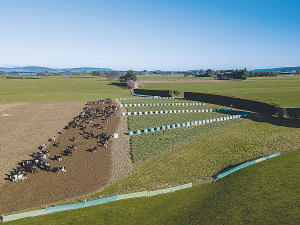
Central Otago District Council (CODC) has voted against a plan to spread treated sewage sludge from Cromwell and Alexandra on farmland near Lauder, a decision Federated Farmers says reflects strong opposition from rural residents.
Pāmu has released its FY26 Integrated Annual Report, reporting a Net Operating Profit of $113 million, more than double the $49 million recorded in FY25.
Meat Industry Association data, released alongside the Red Meat Sector conference in Wellington, shows export value climbing across the US, China, UK and Canada.
Applications are set to open for the 2027 Zanda McDonald Award, a trans-Tasman award recognised for identifying and fast-tracking talented young leaders in agriculture and agribusiness.
The Royal New Zealand College of General Practitioners (the College) and Hauora Taiwhenua Rural Health Network are calling for investment in a proposed new training pathway for rural GPs, warning that many rural practices are struggling to recruit while a large share of the existing workforce nears retirement.