Continental to discontinue agricultural tyre production amid strategic shift
Continental was founded in 1871, offering solutions for vehicles, machines, traffic and transportation.
 increase font size
 Michelin Ultraflex technology supports developments in farm machinery, enhancing productivity while also preserving the soil.
With larger and more powerful machinery comes increased weight and the potential for greater damage to soil.
Increasing load per axle means greater pressure on the ground, which compacts the soil, reducing soil aeration and water absorption. Compaction disrupts crop growth, thus reducing yield.
Michelin Ultraflex technology supports developments in farm machinery, enhancing productivity while also preserving the soil.
Capable of operating at low pressure while supporting more load and more speed, they also offer better traction, which in turn improves productivity in the field, boosting crop yields.
On show will be the Michelin XeoBib and Yieldbib tyres which are integrated with Michelin's Ultraflex technology, making it possible to carry heavier loads at low pressure (less than 1 bar); the Yieldbib offers benefits to the cropping industry and the SprayBib offers 40% more load capacity with 43% less pressure than a conventional tyre.
"Increasingly farmers find themselves under increasing pressure to be more efficient; they are well aware of soil compaction and the negative effect it has on their productivity. This is where modern tyre technology is playing a strong part in the evolution of farming practices" said Andrew Gillam, TRS sales and marketing manager.
BKT, NZ's largest selling agricultural tyre brand, has also developed a new range of increased flexibility tyres to combat the issue of soil compaction; the Agrimax Fortis was created for high-powered tractors used daily for transport, seeding and soil-engaging applications.
Said to be able to support and carry heavy loads at lower inflation pressures than a standard tyre, its wide tread footprint allows for even distribution of weight on the ground without damaging the soil.
Continental was founded in 1871, offering solutions for vehicles, machines, traffic and transportation.
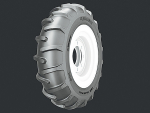
Alliance, a part of Yokohama Off-Highway Tyres, has introduced a new tyre, especially designed for pivot irrigation systems.
Based in Hannover, Germany, Continental started making farm tyres in 1928 and continued right until 2004.
Tyre manufacturer Continental has launched its all-new ‘Agriculture TireTech’ app, aimed specifically at the farming sector.
Trelleborg Wheel Systems and Dana Inc have jointly developed a revolutionary central tire inflation (CTIS) system for farm machines.

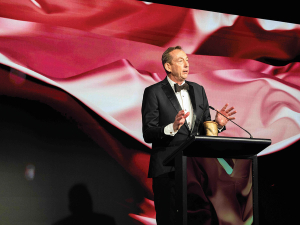
Entries are now open across eleven regions for the 2027 New Zealand Dairy Industry Awards (NZDIA).

Safer Farms is urging farmers to make sure everyone working on farm has safe, suitable footwear for the job.
The Government is backing work on a community-led water storage scheme that could irrigate up to 11,000 more hectares of the Poverty Bay flats, Agriculture Minister Todd McClay says.
Agri-tech company Herd-i has become a new all-region sponsor of the New Zealand Dairy Industry Awards (NZDIA), the largest nationwide celebration of excellence in the dairy sector.
Four candidates have been confirmed for two director positions on Fonterra’s board.
Returning to the family dairy farm after playing 20 years of professional rugby around the world is no easy task.