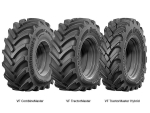
Continental to discontinue agricultural tyre production amid strategic shift
Continental was founded in 1871, offering solutions for vehicles, machines, traffic and transportation.
 increase font size
 Early Continental tyres.
Tyre manufacturer Continental is celebrating the 90th anniversary of its launch of Europe’s first pneumatic agricultural tyre onto the market.
Its 1928 launch saw the advent of the T2 agricultural tractor tyre (AS), and four years later it produced the T3 AS tyre with optimised tread and improved tractive force.
Continental is said to have revolutionised the market again in 1938: as Germany’s first tyre manufacturer the company decided not to link individual tread lugs in its new T4 AS. Since then, the tread lugs in agricultural tractor tyres have been separated in the tread centre, which create a higher tractive force. What’s more, it ensured minimal slip by effectively interlocking with the soil, so rendering chains and grippers unneccesary.
In 2004, Continental’s agricultural tyre segment was sold, with the licence for production and marketing agricultural tyres under the Continental brand passed to CGS/Mitas. However in 2016, Continental reacquired its brand rights and returned to the agricultural tyre market in 2017 with its Tractor70 and Tractor85 premium radial tyres.
Both tyres are characterised by their extreme robustness and durability, and also guarantee a high degree of ride comfort, soil preservation and tractive force.
They have Continental’s patented N. flex technology. This helps increase impact absorption thanks to the nylon textile, while also improving shock absorption due to its robust carcase.
In August 2018, Continental added the new TractorMaster radial tyre with leading-edge D.fine technology to its range.
Continental was founded in 1871, offering solutions for vehicles, machines, traffic and transportation.
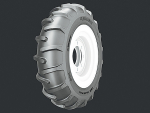
Alliance, a part of Yokohama Off-Highway Tyres, has introduced a new tyre, especially designed for pivot irrigation systems.
Based in Hannover, Germany, Continental started making farm tyres in 1928 and continued right until 2004.
Tyre manufacturer Continental has launched its all-new ‘Agriculture TireTech’ app, aimed specifically at the farming sector.
Trelleborg Wheel Systems and Dana Inc have jointly developed a revolutionary central tire inflation (CTIS) system for farm machines.



Beef + Lamb New Zealand (B+LNZ) says it welcomes the passage of the Natural Environment Bill and Planning Bill, calling the bills a positive step for sheep and beef farmers.
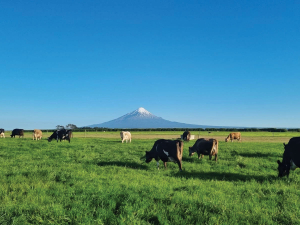
A spate of southerly winds bringing cold temperatures has presented challenges for Taranaki dairy farmers.
Converting a longstanding cropping farm to dairy was the only way to ensure the land stayed in the family long term, says new dairy farmer Rod May.
As the election heats up, Organics Aotearoa New Zealand (OANZ) has launched its election scorecard designed to help voters wanting to support policies that grow organic and New Zealand's organic sector.
A 'tsunami' of milk from key exporting countries is winding down and this may be good news for New Zealand dairy farmers.
Will the good times last? That's one of the key issues to come out of the latest Federated Farmers confidence survey.