Super-premium wool contract delivers major boost for New Zealand growers
Keratin biomaterials company Keraplast and Wools of New Zealand have signed a new superpremium wool contract which is said to deliver a boost to wool growers.
 increase font size
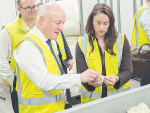
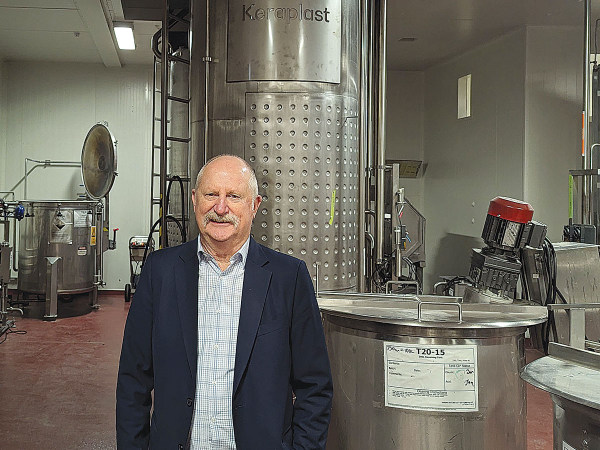 Keraplast chief executive Howard Moore in the company’s new factory at Islington, Christchurch.
A company extracting keratin-based ingredients from strong New Zealand wool believes its expansion into new factory premises in Christchurch will help it to a bigger slice of a US$2 billion international market.
Howard Moore, chief executive of Keraplast Ltd, told attendees at the official opening of the new premises that the company exclusively focuses on ingredients made from the protein.
The ingredients have mostly gone into personal care products such as shampoo, but the company is now expanding into nutraceuticals - products with significant medical or health benefits.
Last year it processed 77 tonnes of wool into 14 ingredient products, exported to 19 countries with sales exceeding $10 million.
"Had that wool been exported on the open market, it would have generated much less than half a million dollars," said Moore.
"This is a success story for adding value in New Zealand. It is Keraplast's goal to grow that volume of wool processed and, while doing so profitably, be able to assist the viability of the farms that supply the wool."
The new factory is expected to process 100 tonnes a year
"The potential for growth in our business is substantial," he said.
Moore told Rural News that supply farmers, who receive a premium above the current market, must have committed to using regenerative farming practices.
The company was sourcing wool from farms that follow the Savoury Institute's Ecological Outcome Verification (EOV) framework.
"We currently have 15 farmers that meet our criteria. They are located in Southland and the North Island but we would welcome new farmers in Canterbury. With growth of around 25% per year - and potentially more - additional farmers will progressively be required."
Moore told the opening that the challenges of the wool industry were well understood.
"Shearing costs for crossbred wool now exceed the price paid for the wool on the open market.
"Keraplast is, however, one of a small number of companies in New Zealand that are using this wonderful raw material for new uses."
He said the company began as Keratec, a portfolio company of the then New Zealand Wool Board's commercial arm. It was acquired in 2009 by American company Keraplast Technologies.
“The US company’s contribution was an extensive portfolio of patents related to keratin, while the New Zealand company brought R&D, small-scale manufacturing, a fully staffed company and access to a high quality raw material – strong wool from regeneratively- farmed sheep farms,” said Moore.
“It really was a marriage made in heaven. Although some were sad to see the New Zealand entity become a wholly owned subsidiary of a U.S company, without the acquisition by Keraplast Technologies of Keratec, neither company may have existed today.”
Moore said that since the two companies became one, the New Zealand subsidiary has been almost entirely responsible for the group’s operations, with R&D, manufacturing and marketing being conducted from New Zealand.
While sales to the personal care market had been declining there was a “marked turnaround” in that market since late 2023. Moore said that in partnership with a US distributor, two nutraceutical ingredient products have now been launched in the U.S. and the company was looking forward to growing sales into the nutraceutical markets of Europe and Asia.
The company acknowledges that it has a responsibility to strive for sustainability, said Moore.
“It is a privilege to be able to use a raw material, crossbred wool from regenerative sheep farms, which do have a low carbon footprint.”
Keratin biomaterials company Keraplast and Wools of New Zealand have signed a new superpremium wool contract which is said to deliver a boost to wool growers.
Keratin extracted from New Zealand wool could soon find its way into products used to minimise osteoporosis, promote gut health, and other anti-inflammatories, says Keraplast chief executive Howard Moore.
A US plastic surgeon’s research into wound repair is providing a boost for New Zealand’s struggling strong wool exports.



LIC shareholders have elected a new North Island representative to the co-operative's Board, along with five representatives to its Shareholder Reference Group (SRG), following the company's Annual Meeting held in Invercargill.
Farmers across parts of Southland and South Otago are continuing to deal with difficult conditions after a prolonged run of wet weather, with pressure building around feed supply, stock management, pasture damage, farm infrastructure and everyday workloads.
Federated Farmers says it welcomes Labour's commitment to reviewing the Sharemilking Agreements Act, calling on other major parties to do the same.
For Canterbury dairy farmers Sian Meijer and Rick Wobben, wearable technology has become one of their most valuable on-farm tools - helping manage 1850 cows across an expansive, high-performing dairy operation while improving efficiency, mating outcomes and day-to-day decision making.
Fonterra has unveiled its annual results for the 2026 financial year, posting $27 billion in revenue and close to $20 billion returned to New Zealand farmer owners and unit holders.
The first major update to the Dairy Cattle Code of Welfare in more than a decade has been released, marking what DairyNZ describes as an important step in ensuring animal welfare standards continue to evolve alongside scientific evidence and on-farm realities.