Feds Back National’s 19 Farming National Standards
National’s pledge to introduce 19 new national standards shows the party is serious about getting Wellington out of farming, Federated Farmers says.
 increase font size
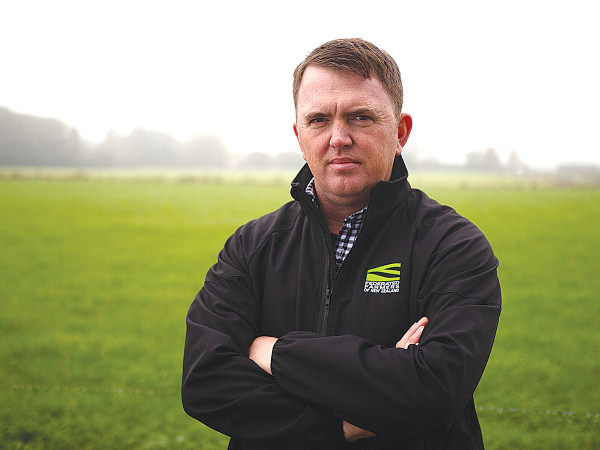 Federated Farmers president Wayne Langford.
Farmers, foresters and conservationists are all calling on political parties to commit to controlling the large mobs of browsing pests such as deer, goats, pigs, and wallabies.
Federated Farmers, the New Zealand Institute of Forestry, and Forest & Bird wrote to major political parties last week, asking for targeted funding to bring about a reset in wild browsing pest numbers.
Federated Farmers president Wayne Langford says wild browsing pests are a major concern for many farmers across New Zealand.
“These wild animals are consuming huge amounts of grass and undermining efforts to improve environmental outcomes,” he says.
“We’ve been getting regular reports of 30 or more wild deer roaming across farmland eating the pasture – and a deer can eat the same amount of grass a day as two sheep. It’s the same issue with other pests too.”
Langford says while there will always be an important role for recreational hunting in New Zealand, the current increase in pest numbers shows recreational hunting alone cannot control them.
“That’s why we are calling for the next Government to commit to making a targeted injection of funding for the Department of Conservation to increase their pest control efforts across the country.
“We know that the Government’s budgets are tight right now, but the reality is that reduced or deferred spending on pest control will just see higher costs in the future as wild animal populations continue to grow,” he says.
New Zealand Institute of Forestry president James Treadwell says the forestry sector is spending millions on wild browsing animal control, with reports of 1,400 goats shot over 400 hectares in just two months on the East Coast.
“Much higher Government funding is needed to reset numbers to a lower level. Without adequate pest management, New Zealand is going to be unable to plant steeper sites and meet the Climate Change Commission forecast of 300,000 hectares of new native forest,” says Treadwell.
“This could result in failure to meet future international climate change commitments, and further increase the reliance on purchasing international carbon credits at great cost to every New Zealander,” he says.
“Better wild browsing pest animal control now would allow climate goals to be achieved, erodible hills to be protected by canopy cover, and more natives to be planted.”
Forest & Bird chief executive Nicola Toki says without a reset of numbers for pest populations such as deer, New Zealand risks native forest collapse.
“Deer, goats, and pigs are wrecking native habitats now. Even worse, because they eat palatable tree species before those plants have a chance to grow, empty forest understoreys are endangering future forests,” says Toki.
“We need New Zealand’s native forests. We need these critical carbon sinks in the fight against climate change. We need them to prevent flooding and erosion. And we need them because, without forests, where are native birds supposed to go?” she says.
“I’m a hunter myself, but although recreational hunting is one tool in the toolbox here, it will never be enough by itself,” she adds. “This is a problem that’s been decades in the making and we need Government to front up and tackle it now."
The three groups have asked the National Party, the Labour Party, the Act Party, the Green Party, Te Pāti Māori and New Zealand First to make a pre-election commitment to significant funding for targeted wild animal control to protect agriculture, forestry, and native forests in a changing climate.
National’s pledge to introduce 19 new national standards shows the party is serious about getting Wellington out of farming, Federated Farmers says.
Mobile phone coverage and reliability are deteriorating in rural areas, and farming families are bearing the cost, according to a Federated Farmers survey.
Central Otago District Council (CODC) has voted against a plan to spread treated sewage sludge from Cromwell and Alexandra on farmland near Lauder, a decision Federated Farmers says reflects strong opposition from rural residents.
Federated Farmers has called on Central Otago District Council (CODC) to drop or vote down a plan to truck sludge from Alexandra and Cromwell to farmland near Lauder, warning it would compound an "outrageous" situation created by a separate council's decision weeks earlier.
Federated Farmers says new legislation replacing the Resource Management Act will cut red tape, unlock investment and help grow New Zealand's export-led economy, after the Planning Bill and Natural Environment Bill passed their third reading in Parliament yesterday.


National’s pledge to introduce 19 new national standards shows the party is serious about getting Wellington out of farming, Federated Farmers says.
The National Party’s policies to make it easier to grow fresh vegetables, secure reliable water and energy and simplify farm planning are practical changes that will give growers the confidence to invest, according to Horticulture New Zealand (HortNZ).
Fonterra Co-operative Group chief financial officer Andrew Murray has resigned to take up a role outside the dairy giant.
A major move is about to get underway to improve the quality and viability of dairy beef and cattle in NZ.
Veterinarians say changes to the code of welfare for dairy cattle provides a positive foundation for improved cattle welfare across the country.
Today, 15 October, is the International Day of Rural Women, which recognises rural women’s contribution to farming, communities and the environment.