Turning back the clock
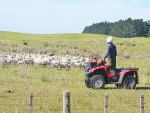
Landcorp became a state-owned enterprise in 1987 as part of the fourth Labour Government’s massive economic transformation.
 increase font size
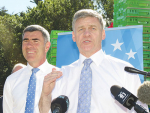
 Deputy Prime Minister Bill English.
Deputy Prime Minister Bill English says more needs to be done to get young people off the dole.
English says while the Government has been addressing the problem by working with the agriculture sector, there are still too many on the welfare roll.
He told Rural News the Government was getting more young New Zealanders to the starting line with higher achievement levels.
"This is being achieved because we are measuring that at schools.
"We are then working with industry to achieve a clearer pathway into further training and into work. We now have the lowest number of young people not in education, employment or training. However, there still too many (unemployed young people) on our welfare rolls."
English was elaborating on comments he made at a recent Federated Farmers meeting about beneficiaries reluctant to work.
The comments, recorded by a Labour MP present at the meeting, quoted him saying many people seeking jobs through the Ministry of Social Development did not show up or stay with the job.
"A lot of the Kiwis that are meant to be available [for farm work] are pretty damned hopeless. They won't show up. You can't rely on them," he said.
"But we can't leave that problem unsolved, which is in the long run your problem as well as ours," he told farmers.
English told Rural News the Government would work individually with them so they are able to do work.
English may raise the issue at this month's DairyNZ Farmers Forum in Hamilton, where he is a headline speaker.
He is expected to tell about 700 farmers to readjust, stick with your banks and keep supporting your dairy company; things will come right.
"They're in a tough patch lasting longer than people expected but they are adapting pretty well in the short term," he says
"We see an industry doing the things they need to do; farmers are not just sitting around complaining. Dairy farmers are addressing problems in cost structures... and so far have convinced their financiers to back them."
The Government shares the industry's confidence in its long term future. Dairying will bounce back, he says.
"There are bound to be farmers who have to make short term decisions under a bit of pressure.
"We would expect that when the industry has had a good run for so long there would be a build of costs and debt.
"As long as they readjust and the banks stick with them and they continue to support their dairy company, we think it will come right. We think they will be there to benefit when it comes right."
The Government is keen to see farmers and banks stick together; they have good reasons to do so.
"The farmers can see a long term future and they need to persuade the banks they will be profitable customers in the future," says English.
"The banks' interest is that they don't act in a way that reduces equity in farms to the point where it represents a risk to the debt."
The Government checks in with banks regularly about their view of the dairy industry; banks are seen by the Government as cautious but positive.
Landcorp became a state-owned enterprise in 1987 as part of the fourth Labour Government’s massive economic transformation.
Southland's new research and demonstration dairy farm, the Southern Dairy Hub, is decidedly up and running – twice!
Prime Minister Bill English recently spoke at the NZ Institute of International Affairs annual dinner and touched on trade. Here are excerpts from his speech.
Prime Minister Bill English says in most regions Maori now have the potential to become the largest long-term investors.


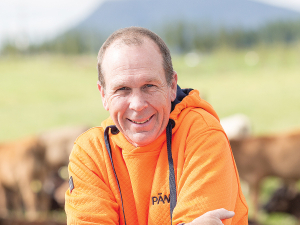
Pāmu has released its FY26 Integrated Annual Report, reporting a Net Operating Profit of $113 million, more than double the $49 million recorded in FY25.
Meat Industry Association data, released alongside the Red Meat Sector conference in Wellington, shows export value climbing across the US, China, UK and Canada.
Applications are set to open for the 2027 Zanda McDonald Award, a trans-Tasman award recognised for identifying and fast-tracking talented young leaders in agriculture and agribusiness.
The Royal New Zealand College of General Practitioners (the College) and Hauora Taiwhenua Rural Health Network are calling for investment in a proposed new training pathway for rural GPs, warning that many rural practices are struggling to recruit while a large share of the existing workforce nears retirement.
Federated Farmers has called on Central Otago District Council (CODC) to drop or vote down a plan to truck sludge from Alexandra and Cromwell to farmland near Lauder, warning it would compound an "outrageous" situation created by a separate council's decision weeks earlier.
Synlait has swung to second-half profit as operations stabilise, but the dairy processor still posted a $75.4m annual loss.