US saves the day for meat exports
The downturn in China continues to impact New Zealand’s red meat exports.
 increase font size

New Zealand's red meat sector encourages all negotiating parties in the Trans-Pacific Partnership (TPP) to work tirelessly to ensure this agreement can be completed by October 2013.
The B+LNZ and MIA chairmen, Mike Petersen and Bill Falconer (respectively) reinforced the need for reduced barriers to agricultural trade, including the elimination of tariffs and other technical barriers as a priority. Achieving that would create benefits and opportunities for all TPP members exporting red meat products.
"The TPP agreement has the potential to create new opportunities for all red meat exporting countries through improved market access, reducing both tariff and non-tariff barriers, and trade facilitation in the Asia Pacific region," Falconer says.
The TPP agreement also offers the opportunity to do business more easily and transparently.
B+LNZ and MIA are present at the TPP negotiating round in Auckland.
Petersen says the New Zealand red meat sector has well established links with a number of producer organisations, including the Canadian and Mexican beef producers.
"Both Canada and Mexico are part of the Five Nations Beef Alliance along with Australia, the United States and ourselves. Together, we represent producers from countries that account for one-third of global beef production and approximately half of global beef exports.
"The Alliance will be presenting its views on what it considers would be a successful outcome for the beef trade from these negotiations. Our view is that we must achieve a high quality comprehensive agreement that acknowledges the importance of beef production and consumption for all participating countries."
B+LNZ and the MIA will continue to monitor progress over coming months and where desired assist negotiators to address the key issues relevant to the red meat sector.
The downturn in China continues to impact New Zealand’s red meat exports.
Country of origin beef and lamb marketing programme Taste Pure Nature is set to move into a new phase.
Nine young Kiwis have been selected for the Meat Industry Association (MIA) scholarship programme for 2024.
NZ's red meat exports dropped to $615 million in October - a 14% drop on the same month last year.
New Zealand must evolve its trade strategy to capture more value from existing markets if the country is to increase exports.


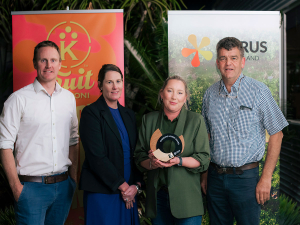
New Zealand's citrus growers were challenged to build their future on the value embedded in their fruit rather than the volume they produce, at Citrus New Zealand's annual gathering in Gisborne on 17 September.

Leading John Deere technicians and apprentices from New Zealand and Australians were recognised at the recent sixth annual JD Technician of the Year Awards, held in Brisbane.
In Dacre, near Invercargill in New Zealand’s South Island, Bruce Dinnington is running a dairy operation unlike any other.
A free online platform aggregating governance vacancies across rural and regional New Zealand has been launched.
Environment Minister Nicola Grigg has announced details of a new rural plastics recycling scheme.
Agricultural drone operators say that a government decision to allow lower-risk drone work without certification won’t lower standards but drive innovation and efficiency.