Lanaco and Blueair Launch World-First NZ Wool Air Filter
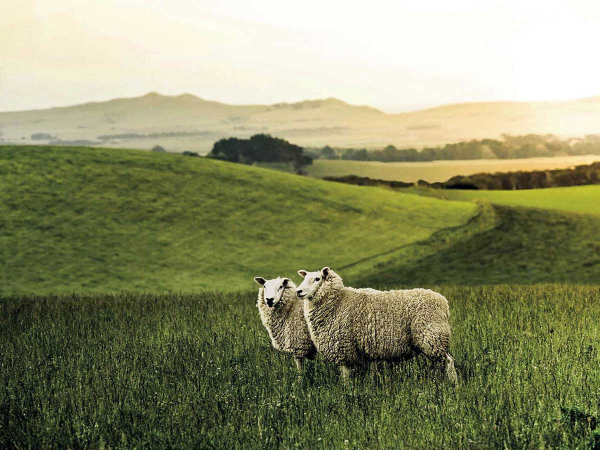
New Zealand wool is reaching new heights as air filtration companies move away from synthetic products to biodegradable alternatives.
 increase font size
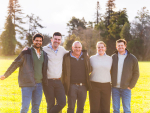
 Managing Director of Prism, Matt Lythe, says the company will help primary producers face up to critical challenges such as developing diversified revenue streams, adjusting to changing climatic conditions, meeting emissions targets, and responding to changing buyer behaviour.
A new technology company has been formed which will help New Zealand’s farmers and primary sector better understand and capitalise on their natural vegetation and biodiversity.
Wellington-based Lynker Analytics has teamed up with red meat exporter and marketer, Silver Fern Farms Ltd, to form a new joint venture called Prism Earth Ltd (Prism).
Managing Director of Prism, Matt Lythe, says the company will help primary producers face up to critical challenges such as developing diversified revenue streams, adjusting to changing climatic conditions, meeting emissions targets, and responding to changing buyer behaviour.
“Prism delivers an integrated set of capabilities including carbon and biodiversity mapping, climate risk analysis, and farm-scale land use simulation to help farmers understand, budget for, and adapt to climate and biodiversity challenges and opportunities,” says Lythe.
“We’ll build on the technology developed by Lynker Analytics, including the award-winning Net Carbon Zero Mapping System which uses remote sensing and artificial intelligence to map, classify and age woody vegetation on grazing land at sub-hectare scales,” he says.
Alongside artificial intelligence (AI), Prism also uses sensor data, geospatial analytics and visualisation software to deliver their services.
Lythe says that Prism will not only support primary producers to realise the potential from their on-farm vegetation and biodiversity, but also help them to prepare for the impacts of climate change and increasing trade and market requirements.
“Future climate has the potential to drive major shifts in land use. These impacts won’t be distributed equally, and the level of adaptation needed will depend on location, land use, and exposure of the farm,” says Lythe.
“As previously suitable climatic conditions change, it is likely that pasture yields will shift and summer water demands will increase. Nitrate leaching could also be more variable, erosion rates can increase, and increasing heat stress could affect animal welfare and milk production from dairy cows.
“We’re also seeing growing global requirements on a range of sustainability measures, through which trusted and verifiable data will play a key role in supporting farmers to navigate market access and realise the opportunities available,” he says.
As well as AI-enabled mapping of carbon (woody vegetation), deforestation, erosion, and invasive plants such as Nassella and Gorse/broom, Prism will work extensively with catchment groups to model science-based long term land use adaptation in economic, environmental, social, and cultural terms. This work will commence at Arai Te Uru Awa, a 23,000ha hill country catchment 10km southwest of Gisborne.
Prism will be headquartered in Wellington and is powered by Lynker Analytics who will continue to develop and deliver AI solutions to a wide range of environmental challenges.
New Zealand wool is reaching new heights as air filtration companies move away from synthetic products to biodegradable alternatives.
Generative AI in the workplace, trials in the field, and industry-relevant research took centre stage at this year’s Grape Days events in Central Otago, Hawke’s Bay and Marlborough.
As dairy farmers lock in plans for the upcoming mating season, a partnership between Fonterra and Silver Fern Farms has been formed with the aim of making it simpler to create additional value from calves not entering the replacement herd.
Applications for Silver Fern Farms Co-operative's next board-appointed farmer director are open.
Silver Fern Farms has tackled the ongoing war-induced shipping challenges to mideast markets by airlifting 90 tonnes of chilled New Zealand lamb and beef to the United Arab Emirates.


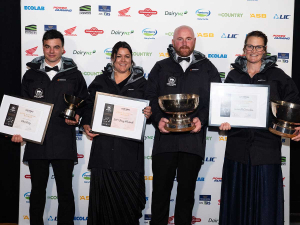
Entries opened on Monday, 5 October 2026 for the 2027 New Zealand Dairy Industry Awards (NZDIA), which organisers describe as the nation's biggest celebration of excellence in the dairy sector.
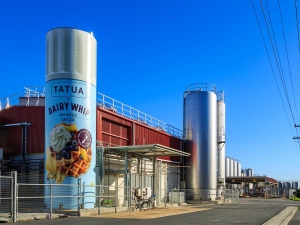
Waikato milk processor Tatua has again declared a record milk payout to farmer shareholders, leaving other processors in the dust.
A Labour-led Government won’t be bringing back the controversial freshwater rules of 2020.
National’s much-touted free trade deal with India featured in the Rural Issues Debate at Mystery Creek, Hamilton on Wednesday night.
New Zealand's 2026-27 freshwater fishing season has opened, with anglers encouraged to head to rivers and lakes over the coming days as conditions look favourable across much of the country.
Central Otago District Council (CODC) has voted against a plan to spread treated sewage sludge from Cromwell and Alexandra on farmland near Lauder, a decision Federated Farmers says reflects strong opposition from rural residents.