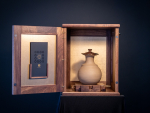
Naki unveils the world’s most expensive manuka honey
Naki Honey, a New Zealand manuka apiary company, has crafted what is believed to be the world's most expensive honey.
 increase font size
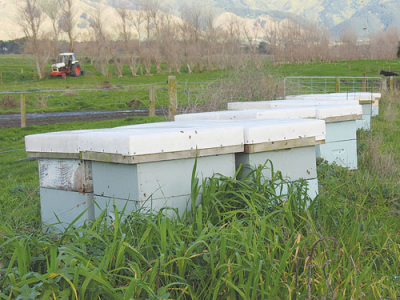 Manuku honey could soon earn more for a central North Maori Trust than its sheep and beef operation.
Manuka honey could long term earn more money for a central North Island Maori trust than its sheep and beef farming operation.
Atihau Whanganui Incorporation, whose large land holdings range from the central North Island to the Whanganui River, is planting manuka on steep country largely unsuitable, or less productive, for sheep and beef.
Chief executive Andrew Beijeman says they are also letting land, which is naturally reverting back to manuka.
Atihau runs 75,000 ewes, 4000 beef cows and a 700-cow dairy farm near Ohakune. The incorporation manages 32,000ha, of which 21,330ha is in pasture. It employs 50 permanent staff, has close to 9000 shareholders and its annual revenue is about $20 million.
Beijeman says they started working with a major honey producer and processer Watson and Son, starting with 400 hives. This trial gave Atihau an insight into the honey business and, having liked it the plan is to expand it.
“It’s working well economically and environmentally and is a good business to be in at the moment. The trial gave us more insight into how profitable the beekeeping business can be and because of this we have decided to keep on with it.”
Beijeman says at the current market prices, on certain classes of land, honey is more profitable than sheep and beef farming. They continue to work with Watson but could move to another processor.
The long-term vision is to accumulate 6000 hives on their property and possibly extend to other farms to further grow the manuka honey business. Atihau already has 14ha in manuka and is planting 50ha more, all on land that is steep and erosion-prone.
“Manuka doesn’t seem to worry about land class when it flowers and we get the same flower off our steep country as we get off it on the flatter land,” he says.
Beijeman says the foray into manuka has many benefits: it provides extra jobs and the revenue stream is good. This season manuka honey will earn $2.7 million for Atihau, but in the long term it will turn at least $5m profit, equalling the profit from the sheep and beef operation.
But despite this Beijeman says they want a diversified business and so will always retain the sheep and beef.
Naki Honey, a New Zealand manuka apiary company, has crafted what is believed to be the world's most expensive honey.
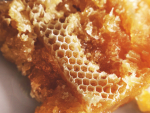
Thousands of honey retailers and professionals worldwide are getting a taste of the remarkable properties of New Zealand mānuka honey.
After three years of record performance, mānuka honey exporter and retailer Comvita has reported an annual net loss of $77 million.
Bee awareness month - September - ended on a high for the struggling apiculture sector.
While confident that the apiculture sector can meet its target of doubling honey exports by 2030, chair of ApicultureNZ, Nathan Guy, says it will be challenging.


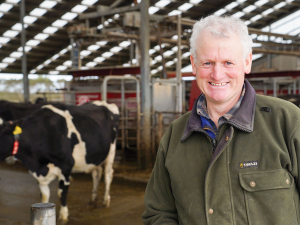
In Dacre, near Invercargill in New Zealand’s South Island, Bruce Dinnington is running a dairy operation unlike any other.

A free online platform aggregating governance vacancies across rural and regional New Zealand has been launched.
Environment Minister Nicola Grigg has announced details of a new rural plastics recycling scheme.
Agricultural drone operators say that a government decision to allow lower-risk drone work without certification won’t lower standards but drive innovation and efficiency.
OPINION: Warning bells are ringing in the arable sector.
Farmgate lamb prices are down by 8%, beef cattle by 4.5% and farm expenditure up by 4.2%.