Removing Grapevines Safely: Disposal Options Compared
I am often asked by industry people, what are the options for removing a grapevine without producing a phytosanitary problem? Can it be done sustainably? What will it cost me?
 increase font size

State farmer Pamu has delivered its strongest operating result on record.
The SOE says this has been achieved with better farm performance and careful cost management, delivering stronger returns for New Zealanders.
The Government will receive a dividend of $25 million during financial year 2026, with a further $15 million to be paid in early FY27.
Return on equity is 9% up from 7.3% in FY25. Net operating profit (NOP) is $113 million, up 131% from $49 million in FY25.
It points out that NOP provides a better reflection of company performance, as it excludes the impact of large and often one-off revaluations of assets, such as livestock and farms.
The company says that as a state-owned farming business, Pamu farms on behalf of the public of New Zealand, and this year’s result reflects the hard work of its farm teams, improved production, lower debt and disciplined everyday decisions across the business.
Despite global cost challenges, the result shows how practical improvements on farm, growing more feed, lifting animal performance, reducing waste, managing costs with discipline, and looking after people, animals and the environment are flowing through to stronger financial results.
Other financial and performance highlights include net profit after tax (NPAT) of $160 million, compared with $120 million in FY25 and net debt reduced by $36 million, continuing to strengthen the balance sheet.
Milk production of 15.8 million kgMS was 2.1 million kgMS increase since FY23 and 1.8 million kgMS since FY25.
Livestock production of 22 million kilograms of product including wool and velvet converted to carcass weight (2.2 million kilograms increase since FY23 and 0.1 million kilograms increase since FY25).
Pamu chief executive Mark Leslie said the result reflected a sustained lift in farm performance across the organisation.
"This is a fantastic result for Pamu, and it belongs to our people. It reflects several years of hard work across our farms and teams improving how we farm, making good decisions every day, keeping a close eye on costs, and getting more from the land and animals in our care."
While stronger commodity prices contributed to the outcome, Leslie said the result was about much more than pricing.
"Price has certainly helped, but our progress goes well beyond the market cycle. Over the past three years we've seen stronger production, improved cost control, a sharper focus on safety and wellbeing, continued progress in reducing emissions, and a stronger connection between our strategy and what happens on farm every day.
"Those are improvements we can control, and they give us confidence that Pamu is in better shape to keep delivering strong returns for future generations of New Zealanders."
I am often asked by industry people, what are the options for removing a grapevine without producing a phytosanitary problem? Can it be done sustainably? What will it cost me?
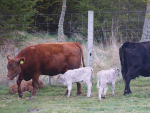
A major move is about to get underway to improve the quality and viability of dairy beef and cattle in NZ.
Good medium to long term prospects for NZ beef, especially in the US, has heighted the focus on various initiatives to capitalise on this situation.
High country stations, mixed sheep and beef farms, Māori-owned farms, corporates and family operations are among the nine commercial farms taking part in the Livestock Innovation Farming Transformation programme, known as LIFT.
Pāmu has welcomed Taranaki student Paige Burston as its newest First Foundation Scholar, supporting her journey towards a career in agriculture and animal science.


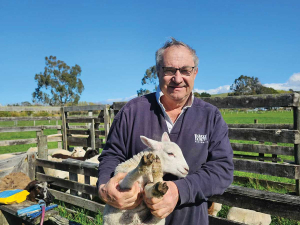
Decades piloting planes has ensured vet and farmer David Hayes is focused on safety. So, after a serious accident while welding on farm, he is sharing his experience so others can learn from it.
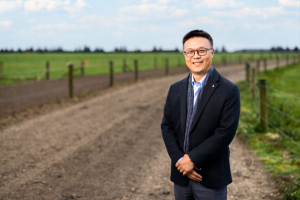
Canterbury milk processor, Synlait Milk has confirmed Leon Fung as its chief executive officer.
OPINION: Making it easier to collect rainwater and use it to grow crops and livestock is a no brainer.
As part of its Election 2026 coverage, Rural News asked political parties how they would help pull the arable sector out of the doldrums. Here's what they said:
Farmers are being encouraged to rethink how they manage waste on farm with the launch of ruralwastesorted.co.nz, a new website bringing together practical tips, real farmer experiences and resources.
New Zealand Winegrowers (NZW) is celebrating the India-New Zealand Free Trade Agreement (FTA) coming into force today, bringing New Zealand wine improved access to one of the world’s fastest-growing economies.