World Butchers' Challenge captains go head-to-head before competition
Ahead of the World Butchers' Challenge, the captains of 14 nations’ teams squared off in Paris over the weekend.
 increase font size

Young butchers across the country have begun sharpening their knives in anticipation of the 2012 Alto Young Butcher and Retail Meat Industry Training Organisation (RMITO) Butcher Apprentice of the year competition.
Current RMITO Butcher Apprentice of the Year, Abigail Smith, has her sights set on the Young Butcher title after her success in the apprentice category last year.
"Last year's win set the standard for me and only makes me eager to push myself to the limit this year and take home the big title," says Abigail.
Entries are now open to the competition, which kicks off with a series of regional heats across New Zealand over the month of July.
The winners of each regional will go on to compete in the Grand Final, to be held on August 24 at the Viaduct Event Centre in Auckland.
During the Grand Final, the young butchers will be put through a practical exam, interview, cutting test and mystery on-stage element to determine who will walk away with the prestigious title and the prize of a study tour to Europe.
The RMITO Butcher Apprentice of the Year will win a study tour to Australia.
The competition is proudly supported by Alto, RMITO, Beef + Lamb New Zealand Inc., Dunninghams, Hellers, Kerry Ingredients, NZ Pork, Wilson Hellaby, Cabernet Foods, Natural Farm and Tegel Foods.
Ahead of the World Butchers' Challenge, the captains of 14 nations’ teams squared off in Paris over the weekend.
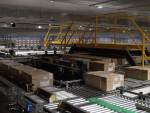
Alliance Group has launched a new $16 million warehouse technology system at its Lorneville plant near Invercargill.
The main beneficiaries of the EU FTA will be kiwifruit, onions, honey, wine and seafood.
A new independent global report commissioned by Meat Business Women shows a rise in women’s representation in senior leadership roles in the meat industry over the past three years.
OPINION: Your old mate was told about some research that proves that what consumers claim and what they actually do are very different.


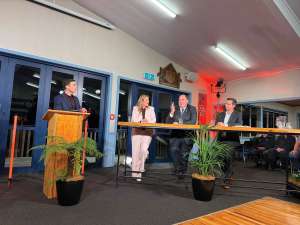
It was billed as a chance for all the political parties to woo the rural vote, but question marks hang over just how effective this was.
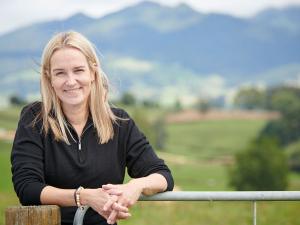
Minister of Conservation Hon Tama Potaka has appointed Susan O'Regan as Chair of the Queen Elizabeth II National Trust (QEII) for a three-year term.
Red meat farmers are welcoming Labour’s plan to review the Emissions Trading Scheme and not to campaign on pricing agricultural emissions.
Where any worker in the kiwifruit industry is mistreated, we expect the authorities to take action.
Mid Canterbury Federated Farmers arable chair, Bevan Lill, said Beef + Lamb NZ data indicated that for the last six years, the average arable return on investment was about 0.8% while inflation ran about 4% - so the average arable farm was going backwards at about 3% a year.
Seed and grain companies share the concerns of arable farmers about the viability of their sector, says Seed and Grain New Zealand chief executive Dr Sarah Clark.