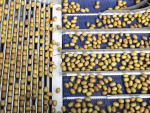
Seeka Posts Record $62m Profit as Zespri Lifts 2026 Forecast
More signs of a booming kiwifruit sector.
 increase font size
 Michael Franks, Seeka chief executive
Our job is not to panic but to professionally manage our way through this predicament.
That's the response from Michael Franks, chief executive of one of the country's largest kiwifruit packhouse and orchard management companies, to the present Middle East crisis, which is driving up fuel prices and creating uncertainty.
He says the immediate issue for Seeka is the cost of diesel for their numerous transport operators who get bins of fruit from the orchards to the packhouses and export produce from the packhouses to the wharf.
Franks says they have applied a fuel adjustment factor (FAF) which means that every week Seeka adjusts the price it pays truckies according to the fluctuations of the price of diesel.
"If we didn't pay them for the extra cost of fuel for handling our fruit, they would not be able to carry on and would run out of money," he told Rural News.
"So, the more sensible and more mature way is to put the FAF in place; the first week it was 6% more and the second week it was 15%. We have a rate that we pay them per bin based on the distance they transport our fruit and, of course, the growers will have to pay, but at least we will get our fruit to market," he says.
Franks says grower returns will suffer nominally, but notes that fuel is only one component of the total transport cost. He says the ships are still sailing, bu there is uncertainty, and it is too early to say what effect the rising costs of fuel will have in markets.
"For example, what will it do to demand and consumer trends and will the people who supported us in the past continue to do so?" he says.
More Than Just Fuel
The issue that occurred during the Covid crisis was the problem of disruption and shortage of containers, but Michael Franks points out that not a lot of container ships go through the Straits of Hormuz.
He says the Middle East is mainly a point of destination, not a point of transit, and so he's not too nervous. But what concerns him is, if and when the war stops, and if and when the fuel starts moving again, how long it will take for the refineries to get back up and running. Franks says there could be some impact in July, August or September.
"As I understand it, this is not just as simple as you go somewhere else and get your crude around the world is quite different and not every refinery can take every type of crude. Our fortunes are what is happening in Korea and Singapore, in terms of where we get our fuel from," he says.
Finally, Franks says the issue goes beyond fuel with supplies of fertiliser coming from the western Sahara Desert. And he adds that the whole petrochemical issue includes the production of plastics used for packaging in the kiwifruit sector.
More signs of a booming kiwifruit sector.
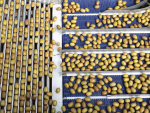
Seeka chief executive Michael Franks says while it's still early days in terms of the kiwifruit harvest, things are looking pretty good.
Fruit trader Seeka posted a record profit and returns to shareholders in 2025.
Kiwifruit and fresh produce handler Seeka will be bouncing back strongly from a big financial loss in 2023.
In another sign of improving agribusiness sentiment, two listed companies have lifted their forecast earnings for the year.


In Dacre, near Invercargill in New Zealand’s South Island, Bruce Dinnington is running a dairy operation unlike any other.

A free online platform aggregating governance vacancies across rural and regional New Zealand has been launched.
Environment Minister Nicola Grigg has announced details of a new rural plastics recycling scheme.
Agricultural drone operators say that a government decision to allow lower-risk drone work without certification won’t lower standards but drive innovation and efficiency.
OPINION: Warning bells are ringing in the arable sector.
Farmgate lamb prices are down by 8%, beef cattle by 4.5% and farm expenditure up by 4.2%.