Farmers around the country are going public big time, demanding their local district, city and regional councils come up with amalgamation plans that meet the needs of rural communities and don't allow urban councils to dominate.
This follows central government putting local authorities on notice to come up with substantial, realistic, cost-effective plans for amalgamation within the next three months or else government will intervene.
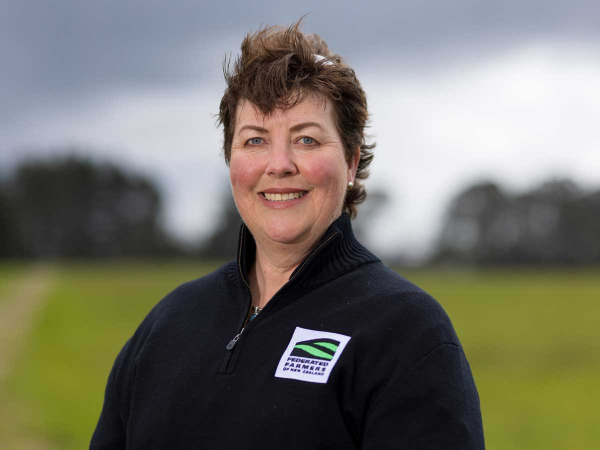
Feds spokesperson on local government, Sandra Faulkner, says elected councillors need to put aside parochialism and engage in open discussions on reform that will work.
She says Feds support the concept of reform.
"But we will only support reforms that lock in strong representation for provincial communities," she says.
Rural Communities Oppose Paying for City Projects
Bay of Plenty Feds president Brent Mountfort echoes this sentiment saying rural communities and towns don't want to be paying for city projects that deliver little benefit to them and notes that Tauranga has the second highest rates per household of the country's 10 metropolitan councils in NZ.
"There should be separate unitary councils for cities and provincial areas," he says.
Rotorua Farmer Warns Against Loss of Rural Input
Federated Farmers Rotorua-Taupo president Braydon Schroder says rural communities rely on local leadership that understands rural realities, from land use to infrastructure and environmental management.
"If decisions are made without proper rural input, we risk creating policies that don't fit or support the needs of Rotorua's farming families and rural businesses," he says.
Southland and Canterbury Farmers Reject Super Council Models
Also concerned about urban domination in the reforms is Southland Feds president Chris Dillon who says in a broad sense farmers want a system that delivers better representation and value for money.
He says the best solution for Southland is to have two unitary authorities - one for Invercargill and anolther for the rest of Southland.
In Canterbury, the fear of rural communities being swallowed up by a super region focused on metropolitan Christchurch has been aired by Feds North Canterbury president Bex Green.
"That would be the worst-case scenario. We are firmly opposed to a single unitary council for Canterbury," she says.
Green says its essential rural representation is protected.
Quality of Governance Is Key
The success or failure of the reforms, according to Waikato regional councillor and former local feds president Keith Holmes, ultimately depends on the quality of the governance of the new structures.
Holmes says there are vast differences between running regional authorities and urban councils and says they require different skill sets.
He says whatg a lot of people don't understand is that over time central government has been unloading work and responsibility on to local councils and not giving them the extra money to deal with these things.
Holmes says in the case of the Waikato Regional Council, there are about 140 Acts of Parliament or central government rules they have to comply with.
"So government has to sort out its own ship as well, and it's grossly unfair to blame hard working staff and elected representatives at local councils for what in many cases is beyond their control," he says.
The election of local councils has long been something of a lottery. Whereas in national politics, parties have some sort of vetting process before an individual can be selected to stand for parliament.
"In the case of councils, it's something of a 'beauty contest' where there is no proper or prior scrutiny of candidates. God knows how I got elected because I have never seen myself as beautiful," he says.
What Holmes is saying is that many people get elected to local councils because of their enthusiasm, profile, carefully crafted CV, or single issue concerns, but often they have little proven governance or business acumen.
He says local authorities are huge businesses and those elected need to have experience in governance or running a business.
He says he favours the Dutch model whereby elected councillors appoint a board to run the council. To some degree this system already exists in NZ with council-controlled entities, but how successful such a system would be in the new reforms is open to debate.
The next three months will be interesting to see how local authorities respond to the Government's deadline and whether the issue of equity between rural and urban can be achieved.