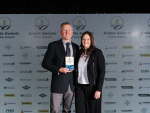
Grace Su, a recent optometry graduate from the University of Auckland, is moving to Tauranga to start work in a practice where she worked while participating in the university's Rural Health Interprofessional Programme (RHIP).
Su received a Bachelor of Optometry (Honours) at the Faculty of Medical and Health Sciences' graduation ceremony earlier this month.
She says the programme strongly influenced her decision.
"The programme gave me the opportunity to do externships in both Whakatāne and Tauranga, which was perfect and then the choice to work at Tauranga was easy," Su says.
Prior to moving to Auckland at age 10, Su grew up in Gisborne.
She says she chose optometry because she loved science, wanted a healthcare career, and preferred a nine-to-five lifestyle over medicine.
Her five-year degree included an honours component and placements in both metro and rural settings.
The RHIP placed Su in Whakatāne for five weeks, living with students from different disciplines and universities.
“It felt like a vacation with friends – we did pub quizzes, group dinners, and explored the community. It made rural work feel less daunting," she says.
Her six-week externship included three weeks at Specsavers Whakatāne and three weeks at Visique Greerton in Tauranga. Working rurally opened her eyes to the challenges and rewards of rural healthcare.
“In Whakatāne, there’s no eye specialist, so patients often travel long distances for care. Navigating those barriers was tricky but rewarding. People were so grateful – whatever you give, they give back two-fold.”
Su says rural practice offers more variety and learning opportunities.
“You see more pathology, and it’s just more interesting overall. Rural communities are different, with more challenges in service access, but that makes the work satisfying," she says.
She says she encourages other students to take part in RHIP.
“Most optometry students are from Auckland, so rural places can seem like empty grasslands – but that’s not true at all. Whakatāne is beautiful, with lots to do. The programme is so well planned; it makes going rural less daunting and shows why it matters," she says.
Su says she is excited to return to Tauranga and work at the Greerton practice where she trained.
She says she enjoys independent optometry for its flexibility and patient focus and hopes to give back to the community.
“I’d definitely work in Whakatāne in the future, if the opportunity arose. It’s not daunting anymore," she says.
Dr Kyle Eggleton, associate dean of rural health at the University of Auckland, says the RHIP is an important component of health workforce development in Whakatāne and the broader Bay of Plenty region.
75% of the junior medical workforce in Whakatāne is recruited through RHIP, along with a large proportion of allied health professionals.
The University of Auckland’s optometry programme is increasing rural placement options to help build a rural optometry workforce.