Hawke’s Bay sheep and beef farmers warned to monitor stock water wells
Sheep and beef farmers in Hawke's Bay are being urged to keep a close eye on the wells that supply water to their stock.
 increase font size

DROUGHT RAVAGED dairy farmers should not expect immediate respite when the rain arrives.
DairyNZ warns rain will rot pasture, leaving cows underfed and give rise to facial eczema. Farmers will need at least three weeks of supplements (100kgDM/cow) to feed out after rain, or on very dry farms up to 160kgDM/cow.
DairyNZ ‘Beat the Heat’ fieldays are helping farmers deal with the drought and preparing them for the post-drought period. Marketing manager productivity Warren Twohey says turnout to the fieldays has been good. About 100 farmers attended days AgResearch’s Tokanui Research Farm in Te Awamutu last week, 100 in Gordonton and 70 in Morrinsville.
The events give farmers confidence to make key decisions as they face prolonged dry weather, Twohey says. “It also gives them opportunity to talk to fellow farmers and get an understanding of how their neighbours are dealing with the drought,” he told Rural News.
He points out problems don’t end when the rains arrive. “When it starts raining, it doesn’t mean everything is hunky-dory. It could be two to three weeks before grass starts growing.” So supplements are essential.
DairyNZ says past experience shows this ‘rot down’ time is when cows are most underfed during a drought. “As pasture can halve after rain, cows can be severely underfed and will require 50-75% of their intake from supplement. If feeding out before the drought, the amount required after rain will at least double in the first 7-10 days, reducing as pasture cover improves.”
Pasture management is also critical when the autumn rain arrives. After autumn rain and very rapid grass growth, slow herd rotation will keep pasture cover high. But it warns not to speed the rotation to fully feed the herd, as this will hinder pasture growth.
The rains will also bring animal health problems such as facial eczema. Maintaining a low zinc dosage is then worthwhile. “When the rain does come, spore counts are likely to rise dramatically and by maintaining a low zinc dosage the cows are already adapted to zinc should zinc dosages need to be lifted.”
Farmers are also advised to go easy on copper supplementation, especially if the cows are fed PKE. If feeding out PKE, mind the impact this may have on copper levels in the cow’s liver. “Avoid routine copper supplementation for cows fed PKE in large amounts over long periods without checking the cows copper status first.”
With cull cows being sent to the works now is a good time to monitor copper status via liver biopsies to ensure copper is within acceptable limits.
Sheep and beef farmers in Hawke's Bay are being urged to keep a close eye on the wells that supply water to their stock.

Fears of a serious early drought in Hawke’s Bay have been allayed – for the moment at least.
OPINION: Farmers along the east coast of both islands are being urged to start planning for drought as recent nor'west winds have left soil moisture levels depleted.
As you approach Hastings from the south along SH2, the colour of the west-facing hills are a good indicator of a drought.
New research could help farmers prepare for a future where summer rainfall is increasingly unpredictable and where drought risk is rising, no matter what.


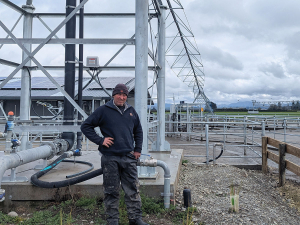
Converting a longstanding cropping farm to dairy was the only way to ensure the land stayed in the family long term, says new dairy farmer Rod May.

As the election heats up, Organics Aotearoa New Zealand (OANZ) has launched its election scorecard designed to help voters wanting to support policies that grow organic and New Zealand's organic sector.
A 'tsunami' of milk from key exporting countries is winding down and this may be good news for New Zealand dairy farmers.
Will the good times last? That's one of the key issues to come out of the latest Federated Farmers confidence survey.
Outgoing Fonterra Co-operative Council chair John Stevenson says that it has been a privilege to represent the co-op's farmer shareholders.
Have a plan in place for your cows and staff.