They were looking both to sell more pork and small goods into New Zealand and looking at the potential for getting more NZ lamb into EU markets.
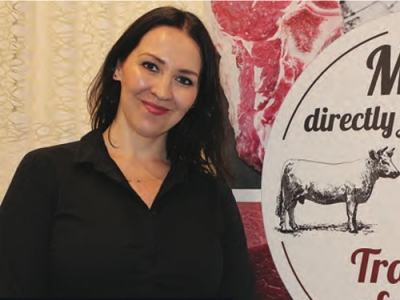
Their interest was in the market potential for two-way trade, Agnieszka Rozanska, managing director of the Union of Producers and Employers of the Meat Industry (UPEMI) told Rural News. Their campaign 'The Taste and Quality of Tradition Directly from Europe' is also touring Singapore, South Africa, Taiwan and Kazakstan.
Rozanska explained UPEIMI, based in Warsaw, mostly represents the Polish meat industry but has some members in other European countries.
"In our campaigns we talk about the whole EU and we support and promote in general the European meat industry. We are strongly connected and we do a lot of cooperation and product together with the EU," she says.
"While we keep talking about the whole European market together because of the bigger potential, we support mostly the Polish meat industry," including processing plants, slaughterhouses, cutting plants and farmers.
"We are here to get information about the market and to show what kind of products we can bring," she says.
Rozanska says NZ's lamb exports to the EU last year were at least 141,000 tonnes. "Compared to that, our export of pork to NZ is small, just 25,000t from the whole EU. It is not a big number; we would like to export more since NZ does not produce enough for the internal market.
"We are happy to cooperate with NZ. We know NZ-brand lamb is well known all over the world. In Poland we would like to introduce this product to our consumers who are not very aware of lamb because we do not consume much of this kind of meat.
"There are many opportunities and options to deal and do business with NZ, to build profit and advantages for both sides.
"Our campaign introduces European pork mostly and small products like sausages, ham, etc which are well known in the world. We export a lot of pork and processed products to other countries so we want to check NZ and try to build new relations here and see if we can do more business in future."
Rozanska says the EU is the second-biggest producer of pork in the world after China. "We do a lot of processing as well – different kinds of smoked sausages and hams. We have a wide range of products."
It is a matter of finding common interest to talk about this business. "If we find some clients in this market we would definitely like to build relationships. We know before we can do big business we need time to build relations.
"We have had very good meetings already," talking to farmers and some exporters who already work with the EU. "We would like to sell pork and on the other side buy lamb and maybe other products. This is not a one sided business; we are aware we have to build it for both sides."
The whole EU is a very big producer of food and now has a policy to introduce its products to many countries, she says. The Poles have previously done promotions in the US, South Korea, Vietnam and China.
"We are open minded; we like to check new markets; the world seems to be smaller and trading is all about global contacts; it is not so complicated any more.
"People all over the world are travelling and the goods and services travel with them; it's always about finding the right partners and if there are people who will work with us we will definitely do business."
EU free-trade agreements take time
Free trade agreements with the EU always take time, says John Leslie, economics and trade adviser for the EU delegation.
The EU's negotiating agenda currently includes the US, Japan, a bilateral investment treaty with China, an update with Mexico and recently concluded negotiations with the Philippines, Vietnam and Singapore.
"There is an active agenda; where we are now has been in the works for some time," he says.
He says European commission president Jean-Claude Juncker hasintroduced his better-regulation agenda, obliging them to do an impact assessment which is detailed and required a 90-day public consultation that concluded early July. "So that process is moving forward but the objective is to make sure if we do something we do it as well as we can," says Leslie.
Agnieszka Rozanska says from her experience of observing negotiations between the EU and South Korea, it took a long time to finalise. Now in place for five years, it has had great impact on trading between the two partners, eliminating tariffs and simplifying investment.
"It works for both sides and I believe it will be the same for NZ. Usually these negotiations take a long time. We are happy to know it is started and it will bring us a lot of advantages. I am very positive about this agreement and I know it will boost the NZ and EU relations in trade and investment."