Federated Farmers Praises Labour's Emissions Tax Backdown
For the first time in a quarter of a century, Federated Farmers has something positive to say about the Labour Party’s climate change policy leading into a general election.
 increase font size
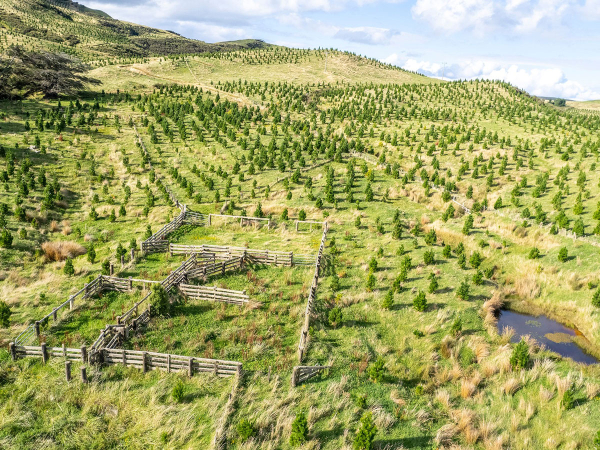 NZIF says unnecessary changes to New Zealand’s Emissions Trading Scheme will seriously erode investor confidence.
The New Zealand Institute of Forestry (NZIF) says unnecessary changes to New Zealand’s Emissions Trading Scheme (NZ ETS) will seriously erode investor confidence and result in significant reductions in forest planting rates.
NZIF president Adrian Loo was responding to the report “Adrift: What future does the Emissions Trading Scheme have?” in which the Parliamentary Commissioner for the Environment, Simon Upton, called for a major rethink of forestry’s role in the ETS.
Loo said the report raised legitimate questions about the balance between reducing gross emissions and removing carbon through forests, but proposals to halt new forestry registrations or progressively remove forestry from the scheme were premature.
“New Zealand needs faster reductions in gross emissions, but this does not diminish the importance of carbon removals. We need both.
“The challenge is to design a system which recognises their different roles and provides credible incentives for each.”
Loo said the report’s modelled scenarios were projections rather than predictions and depended heavily on assumptions about future carbon prices, planting rates and forest owner behaviour.
“A model looking ahead to 2075 can help us understand possible risks, but it cannot tell us with certainty how markets, technology, landowners or governments will behave over the next 50 years. Major policy decisions should not be based on one set of modelled scenarios.”
Loo said the report also overlooked the difference between government auction units and forestry units.
“Government auction units are permissions to emit. Forestry units recognise carbon which forests have actually removed from the atmosphere. Treating both forms of supply as though they have the same climate effect overlooks a fundamental difference.”
For the first time in a quarter of a century, Federated Farmers has something positive to say about the Labour Party’s climate change policy leading into a general election.

New Zealand's Emissions Trading Scheme (NZ ETS) encourages afforestation while not achieving climate goals, says a new report released by the Parliamentary Commissioner for the Environment, Simon Upton.
Conversions of sheep and beef farms to forestry have slowed, however new research from Beef + Lamb New Zealand (B+LNZ) suggests land of value for food production remains at risk.
OPINION: Proponents of regenerative agriculture tend to be naturally aligned with a 'green mindset', so they will be nonplussed with their new mates in the US of A.
New Zealand needs to make sure that it continues to focus on its own food security, according to HortNZ board member and blueberry grower Dermott Malley.



Seed and grain companies share the concerns of arable farmers about the viability of their sector, says Seed and Grain New Zealand chief executive Dr Sarah Clark.
The New Zealand Institute of Forestry (NZIF) says unnecessary changes to New Zealand’s Emissions Trading Scheme (NZ ETS) will seriously erode investor confidence and result in significant reductions in forest planting rates.
For the first time in a quarter of a century, Federated Farmers has something positive to say about the Labour Party’s climate change policy leading into a general election.
A warning for New Zealand seed and grain companies – be prepared for an exodus of farmers from the arable sector.
Now in its fourth year, the 2026 Fencing Industry Awards, formed part of the proceedings of the FCANZ Conference, held in Nelson during August.
DairyNZ deputy chair Cameron Henderson has been re-appointed unopposed for another term.